More Than Just Moving: How to Use an Activity Walker to Boost Your Baby’s Brain Power<
More Than Just Moving: How to Use an Activity Walker to Boost Your Baby’s Brain Power<
More Than Just Moving: How to Use an Activity Walker to Boost Your Baby’s Brain Power
The Mobile Discovery Center
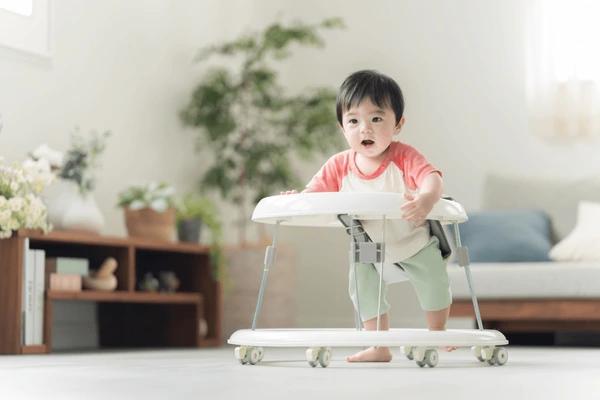
A baby walker is often viewed only as a tool for mobility, but modern designs are actually "Mobile Discovery Centers." When a baby is in a walker, they are engaging in Multimodal Learning—using their hands, eyes, and ears simultaneously while their legs are in motion. At Mamaverse, we explore how to maximize the educational potential of your walker to turn every "stroll" around the living room into a cognitive workout.
1. Fine Motor Skills and the "Activity Tray"
While the legs are busy walking, the hands should be busy playing. The activity trays on StarAndDaisy walkers are designed to challenge Fine Motor Precision.
- Gears and Rollers: These teach "Cause and Effect." (If I turn this, that moves).
- Shape Sorters: These develop spatial reasoning and "Object Permanence."
The force required to manipulate these toys can be calculated by the Torque needed to rotate the gears:
$$\tau = r \times F \times \sin(\theta)$$
By interacting with these varied resistances, your baby is strengthening the small muscles in their fingers and wrists, preparing them for future tasks like holding a spoon or a crayon.
2. Auditory Stimulation and Language Cues
Many StarAndDaisy walkers come equipped with musical buttons and animal sounds. This isn't just noise; it’s "Auditory Discrimination." When a baby presses a button and hears a specific note, they are learning to associate a specific action with a specific sound.
Parents can use the StarAndDaisy app to find song-based play routines. Narrating the sounds—"That’s a blue bird!"—while the baby is in the walker helps bridge the gap between physical movement and language acquisition.
3. Visual Tracking and "Environmental Scanning"
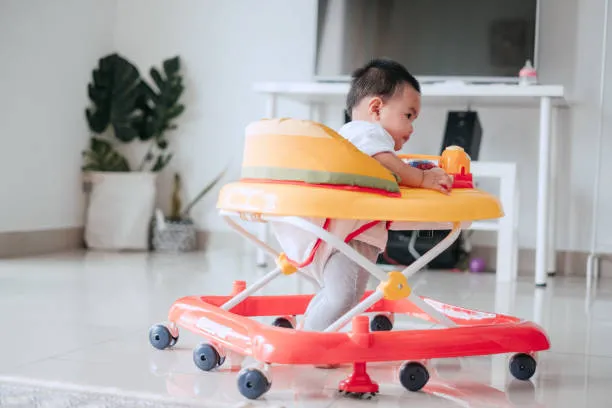
When a baby is crawling, their field of vision is limited to the floor. In a seated or push walker, they perform "Environmental Scanning." They learn to look ahead to avoid obstacles and track moving objects (like a pet or a sibling) from a higher vantage point. This improves their Visual Depth Perception, a critical skill for navigating complex environments as they become more mobile.
4. Setting the Scene: The "Safe-Zone" Strategy
To get the most out of playtime, the environment must be "Walker-Ready."
- Clear the Paths: Remove area rugs that could cause friction or tripping.
- Corner Guarding: Since a walker allows a baby to move faster than they can crawl, ensure all sharp corners are padded.
- The "Stop-Point" Rule: Never use a walker near stairs or uneven thresholds.
Conclusion
A walker is a bridge to a bigger world. By focusing on the activity tray for fine motor skills and creating a safe environment for environmental scanning, you turn a piece of gear into a developmental powerhouse. Explore the high-engagement designs at StarAndDaisy and watch your baby’s world—and brain—expand.