Helping Your Baby Find Their Feet: A Parent’s Guide to Using Walkers for Play and Movement
Helping Your Baby Find Their Feet: A Parent’s Guide to Using Walkers for Play and Movement
Helping Your Baby Find Their Feet: A Parent’s Guide to Using Walkers for Play and Movement
Introduction: That First Burst of Independence
In the Mamaverse, there is a magical window between 6 and 10 months when your baby realizes they aren't just a stationary observer—they want to explore. This "pre-walking" phase is full of energy and curiosity. A baby walker is often a parent's go-to tool to satisfy this need for mobility. However, using a walker isn't just about putting a baby in a seat and letting them go; it's about creating a structured environment for discovery.
This 1500-word guide explores the "best practices" of walker play. We will discuss how to time your baby's sessions, the importance of floor texture, and how StarAndDaisy walkers can be used as multi-sensory activity hubs. At Mamaverse.co, we believe that movement should be a joyful, supervised, and developmentally supportive experience.
1. Timing is Everything: When is Your Baby Ready?
Before you introduce a baby walker, your little one needs to meet specific physical "gateways."
- Core Stability: Your baby should be able to sit upright unassisted for at least 10 minutes. This ensures their spine can handle the upright posture of the walker.
- Flat-Foot Contact: When in the walker, your baby's feet should be able to touch the floor flat. If they are on their tiptoes, the seat is too high; if their knees are bent, it’s too low. StarAndDaisy models feature height-adjustment clips to ensure a perfect ergonomic fit.
2. The "20-Minute Rule" for Healthy Hips
Moderation is the key to developmental success. Experts in the Mamaverse suggest using a walker in short bursts.
Avoid Overuse: A baby's muscles are still learning how to bear weight. Using a walker for hours can lead to "lazy" muscles. Instead, treat walker time like a "gym session"—20 minutes of active exploration followed by floor time or "tummy time." This balance ensures that they still develop the muscles needed for crawling and unassisted walking.
3. Creating a "Safe Zone" for Exploration
A walker gives a baby a speed and height they aren't used to. You must "think like a toddler" to prep your home:
- The "Edge" Problem: Never use a walker near stairs or uneven door thresholds. Even a StarAndDaisy walker with safety brake pads needs a flat, enclosed space.
- The Reach Factor: Your baby can now reach higher. Clear coffee tables of hot liquids, heavy books, or small objects that could be pulled down.
- Surface Selection: Hardwood or tile is best for easy rolling. If you have thick rugs, your baby may get frustrated, which is a great time to switch to the walker's "stationary mode" for toy play.
4. The Activity Hub: Brain Work While They Move
A modern walker is also an educational toy.
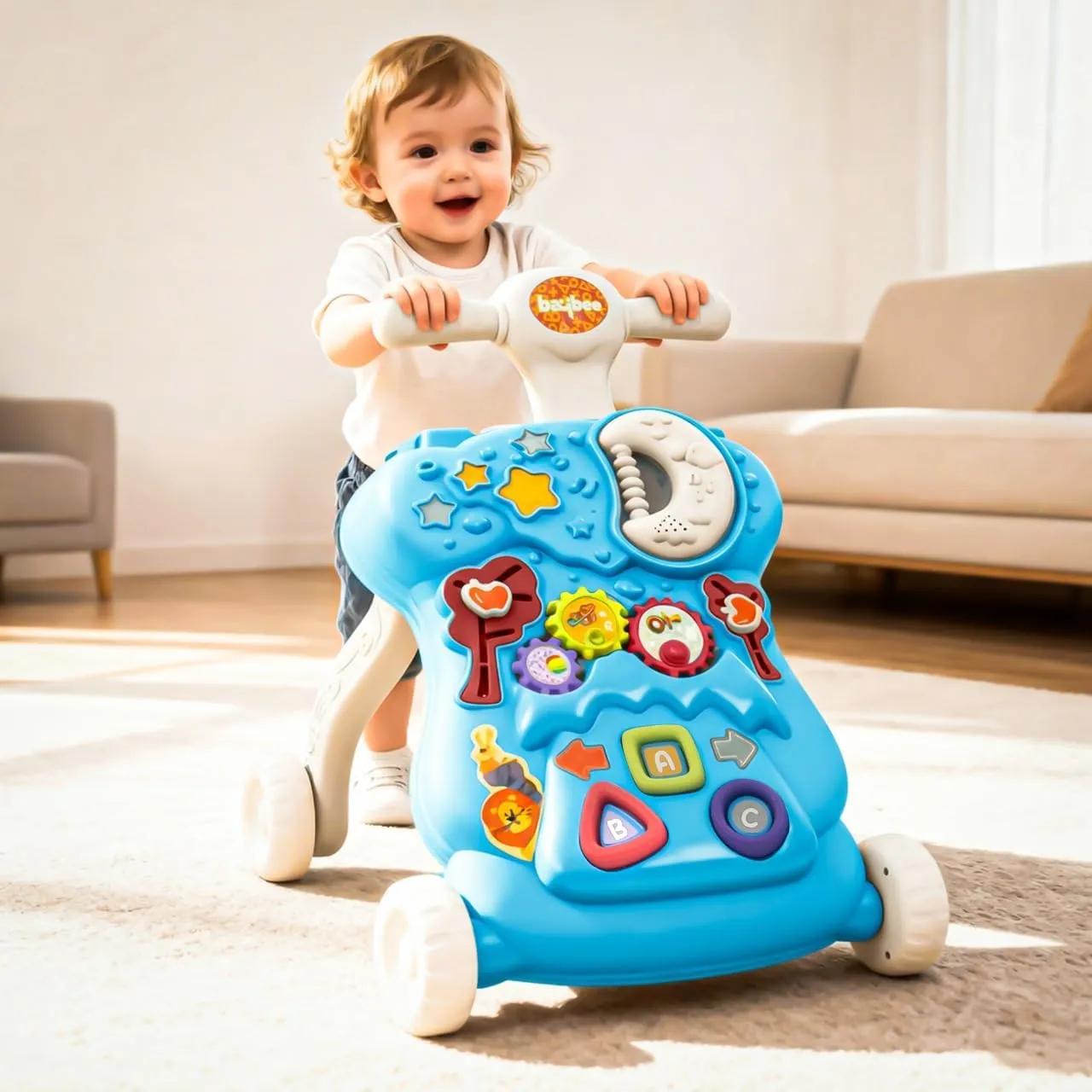
Sensory Engagement: StarAndDaisy baby walkers come equipped with musical trays, spinning gears, and textured buttons. Encourage your baby to stop and play with these items while they are upright. This builds hand-eye coordination and fine motor skills, ensuring that while their legs are moving, their brain is growing too.