The Great Transition: Moving from Crib to Play Area
Learn how to safely transition your baby from crib to play area with practical tips for Indian homes.
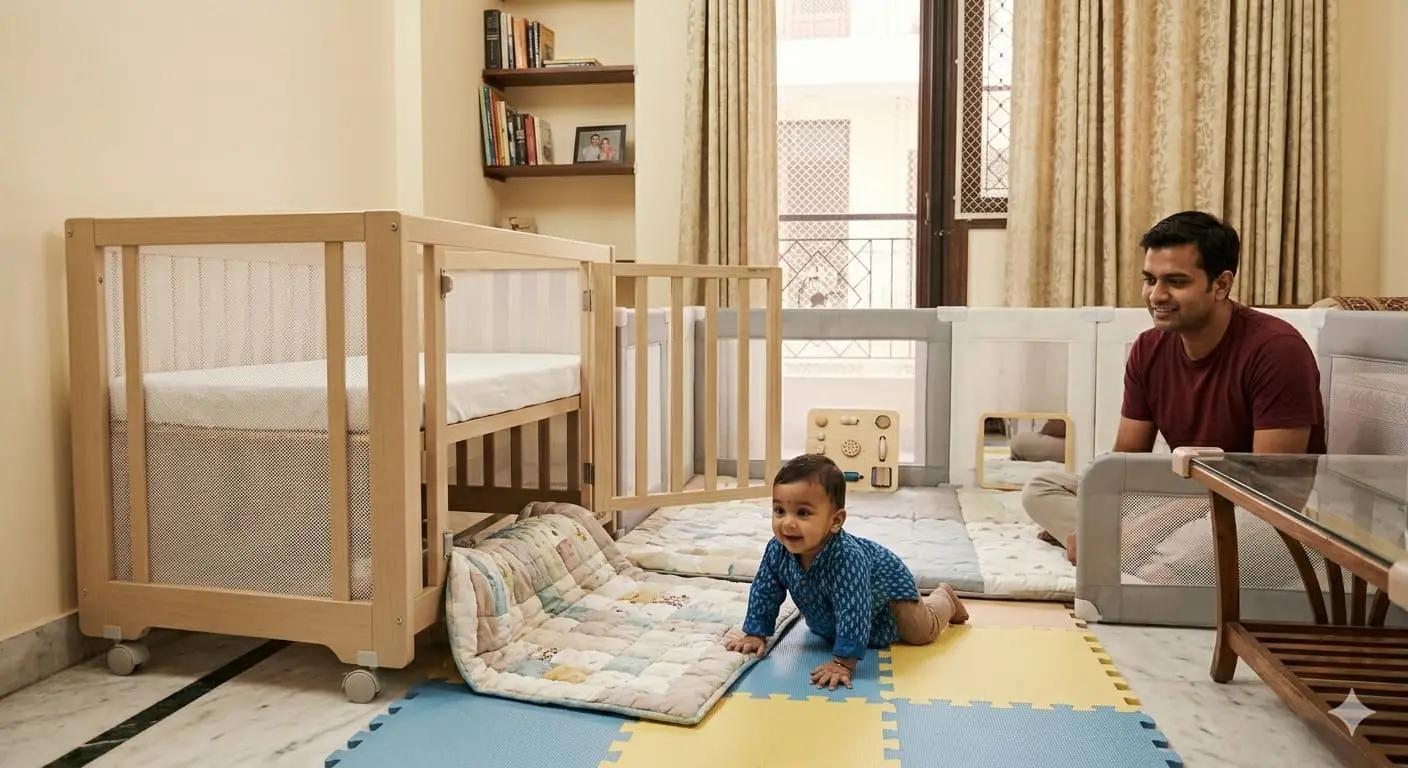
As babies grow, they transition from spending most of their time in a crib to actively exploring the floor. This stage is crucial for their physical, cognitive, and sensory development. Crawling, rolling, and eventually attempting to stand are all milestones that require a safe and supportive environment. Creating a dedicated play area ensures that your baby can explore freely while minimizing potential risks.
In Indian homes, where space may be shared and furniture is often heavy or closely arranged, setting up a secure play zone becomes even more important. A well-planned play area not only protects your baby but also gives parents peace of mind during daily activities.
Defining the Boundaries
Babies are naturally curious and tend to move toward anything that catches their attention. Without clear boundaries, they may wander into unsafe areas such as kitchens, balconies, or near electrical outlets. Using a playpen is one of the most effective ways to create a secure and defined space.
Modern playpens are designed to be lightweight, foldable, and easy to assemble. They can be adjusted to fit different room sizes and layouts, making them ideal for compact homes. Transparent or mesh-sided playpens allow parents to keep an eye on their baby while giving the child a sense of openness rather than restriction.
Placing the playpen in a well-lit, ventilated area ensures that your baby remains comfortable while playing. Adding a few favorite toys inside can make the space inviting and engaging.
Soft Landing Zones
Since babies are still developing balance and coordination, falls are inevitable. Creating a soft landing surface is essential to prevent injuries. Firm yet cushioned mats provide the right support for crawling, sitting, and early walking attempts.
Interlocking foam mats are a popular choice as they are shock-absorbent, easy to clean, and customizable according to available space. They also act as a barrier against cold or hard flooring such as tiles or marble, which are common in Indian households.
Ensure that the mats are made from non-toxic materials and have a non-slip base to prevent movement during play. Regular cleaning helps maintain hygiene, especially since babies spend a lot of time in direct contact with the floor.
Parental Involvement
While creating a safe space is important, parental involvement plays an equally vital role in a baby’s development. Being present nearby allows you to supervise and guide your baby without interfering too much in their exploration.
Encourage your baby to move independently by placing toys slightly out of reach or engaging them in simple activities within the play area. This helps build confidence, motor skills, and problem-solving abilities.
Gradually, as your baby becomes more comfortable and aware of their surroundings, you can allow them slightly more freedom while still maintaining a safe environment.
Minimizing Distractions and Hazards
A good play area should be free from unnecessary distractions and hazards. Avoid placing sharp objects, heavy items, or unstable furniture near the play zone. Keep cords, chargers, and small objects out of reach to prevent accidents.
Organizing toys in a simple and clutter-free manner also helps your baby focus better and reduces overstimulation. Rotating toys occasionally can keep the play area interesting without overcrowding it.
Flexibility and Adaptability
As your baby grows, their needs and abilities will change. A play area should be flexible enough to adapt to these changes. Modular playpens and adjustable mats allow you to expand or modify the setup as required.
This flexibility ensures that the play area remains useful over time, supporting different stages of development from crawling to walking.
Check out modular playpens at StarAndDaisy for flexible setups that suit modern Indian homes.
Takeaway: A well-designed play area encourages safe exploration, builds confidence, and supports your baby’s overall development. With the right balance of safety and freedom, your child can grow and learn in a secure environment.
Vandana Raghav
Expert in Infant and Toddler Health
Here is the polished and professionally corrected version of your bio. I have refined the flow to make it sound more authoritative while maintaining its warmth. Professional Bio (Polished) I am a writer and researcher specializing in infant and toddler health, pregnancy care, and newborn development, with more than 15 years of experience in the baby and parenting industry. Over the years, I have worked closely with manufacturers and retailers of premium baby products, gaining deep insight into the safety, quality, and functionality that parents prioritize for their children. My work focuses on guiding expectant mothers and new parents through the critical stages of pregnancy, newborn care routines, infant health, and toddler development. By combining my extensive industry background with continuous research on modern parenting practices, I provide practical, reliable, and accessible information that empowers families to make confident decisions. I regularly contribute insights on maternal wellness, newborn essentials, and early childhood development, bridging the gap between industry knowledge and real-world parenting to support families through the formative early years of a child’s life.
Comments (0)
Leave a Comment
Related Articles
Keeping Babies Germ Free at Home
Learn effective tips to keep your baby safe from germs at home. A clean environment promotes health and happiness for your little one.

When to start doctor visits after birth? Frequency guide
Doctor visit schedule for newborns and infants in India.
Top Baby Essentials Every Indian Parent Actually Uses
Confused about what baby products you really need? Discover the essential baby items Indian parents actually use daily—practical, simple, and budget-friendly.

Natural Ways to Protect Baby Skin
Discover effective natural remedies to protect and nourish your baby's delicate skin. Keep rashes and irritations at bay with these tips!