Starting Solids: The Complete Guide to Weaning Your Baby Without the Anxiety
Starting solids is one of the most anticipated and most anxiety-producing milestones of the first year. Here's everything you need to know — from the first spoonful to confident family mealtimes.
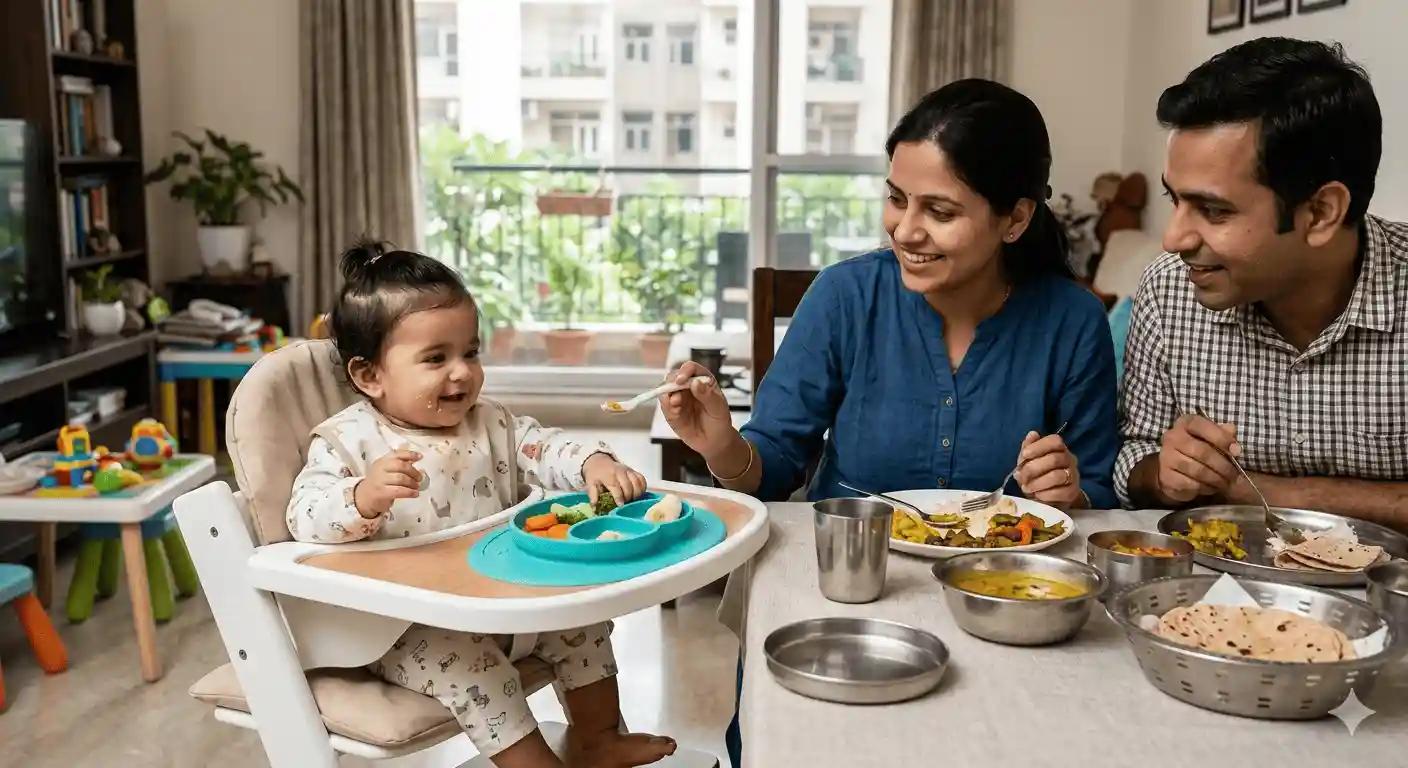
Starting Solids: The Complete Guide to Weaning Your Baby Without the Anxiety
Around five and a half months, parents start watching their babies eat. Watching them reach for food on a plate, watching them track a spoon to someone's mouth, watching them open and close their own mouth in apparent imitation. The signs are there. The conversation starts.
Starting solids — the transition from milk-only feeding to the gradual introduction of food — is one of the most anticipated and most anxiety-producing milestones of the first year. Parents worry about allergies, about choking, about how much, how often, what first, what never, what if they hate everything.
Here is the calm version of the guide.
When to Start: The Signs That Matter More Than the Age
The general recommendation is around 6 months, and not before 4 months. But more important than the calendar is readiness. The signs of readiness for solids:
- Baby can sit up with minimal support and hold their head steady and upright.
- Baby shows interest in food — watching people eat, reaching for food, opening their mouth when food approaches.
- Baby has lost the tongue-thrust reflex — the instinct to push objects out of the mouth that protects newborns from choking.
If these signs are present closer to 5.5 months, starting then is fine. If they're not present at 6 months, waiting a few more weeks is also fine. Baby-readiness is more reliable than the date.
Purees vs Baby-Led Weaning: The Debate, Resolved
The internet has generated more heat than light on this particular question. The short answer is: both approaches are safe, both have evidence behind them, and the best approach is the one that works for your baby and your household.
Traditional weaning (purees progressing to mashed and then textured foods) is the most commonly used approach globally and is entirely evidence-based. It gives parents control over texture progression and makes it easier to monitor intake.
Baby-led weaning (offering appropriate finger foods from the start, letting baby self-feed from 6 months) builds independence, develops the pincer grip, and encourages babies to explore food at their own pace. The choking concern is the most common objection — and the research shows that gagging (very common and protective) is different from choking (rare) and is not increased by baby-led weaning when done correctly.
Many families use a combination: purees for some meals, soft finger foods for others. There is no prize for ideological purity.
What to Feed First: The Indian Kitchen Advantage
Indian home cooking is, arguably, one of the world's best-equipped cuisines for baby weaning. Dal, khichdi, soft-cooked vegetables, rice with ghee, ragi porridge — these are the foods Indian babies have been started on for generations, and the nutritional logic is excellent.
First Foods (6 Months)
- Single-ingredient purees or soft cooked vegetables and fruits
- Dal water
- Mashed banana
- Sweet potato
- Cooked carrot
- Apple puree
6–8 Months
- Khichdi (soft rice and dal)
- Ragi porridge with milk
- Mashed cooked vegetables
- Soft paneer cubes for finger food
8–10 Months
- Family foods with reduced salt and spice
- Soft diced fruit and vegetables
- Small pieces of soft roti
10–12 Months
- Much of what the family eats, with salt and sugar minimised
- Most allergenic foods should have been introduced by now
Salt and added sugar should be avoided before 12 months — the kidneys are not yet equipped to process them in adult quantities. Honey should never be given before 12 months (risk of infant botulism).
The Allergy Introduction Question
The guidance on allergenic foods has shifted significantly in the last decade. Current evidence strongly supports early introduction (around 6 months) of the most allergenic foods — peanuts, eggs, dairy, wheat, fish, sesame — as a protective measure against allergy development, not a risk.
Introduce one new allergenic food at a time, in small amounts, and wait 2–3 days before introducing another new one. This allows you to identify any reaction clearly. In the absence of known family history of severe food allergies, early introduction is recommended.
The Equipment That Makes Weaning Actually Manageable
Weaning is messy. This is not a problem to be solved — it is a feature of the process. Babies learn about food through sensory exploration: touching, smearing, throwing, and occasionally eating it. An environment that accommodates this mess rather than fighting it makes mealtimes significantly less stressful.
The most important piece of equipment is not a special spoon or a baby food maker. It is a good high chair — one that positions baby correctly (upright, feet supported, tray at the right height), is easy to clean, and brings baby to family table height so mealtimes are a shared experience from the start. Browse this range of high chairs designed for Indian families and weaning babies — multi-position recline for early weaning, full adjustability as baby grows.
When Baby Refuses Everything: What's Normal and What to Do
Almost every baby goes through periods of food refusal. It is not a sign that weaning has failed. It is a sign that the baby has preferences, a normal appetite variation, or is going through a developmental phase that temporarily suppresses interest in food.
The research-backed approach: offer without pressure, remove without drama, try again another day. A baby who is repeatedly pressured to eat develops negative associations with mealtimes that outlast the original refusal. A baby who is offered food calmly and repetitively — even if it's rejected twenty times — eventually eats it.
Keep the high chair experience positive. Keep mealtime relaxed. Keep offering. The meal that is rejected today with a look of genuine betrayal will, on some future Tuesday, be eaten with enthusiasm. Explore this range of feeding essentials and mealtime gear to make the weaning environment as positive and practical as possible.
The One Thing That Matters Most
Eat together. Sit at the table with your baby, eat your own food, and let them watch you. Babies are mimics by design. The most powerful influence on a child's relationship with food is not the method used to introduce solids. It is the daily experience of watching the people they love eat, enjoy, and share meals without anxiety.
That is the whole weaning curriculum. Everything else is details.
Frequently Asked Questions
Kanika
Author - Parenting and Maternal Wellness
Hi, I’m Kanika, a parenting and maternal wellness writer at Mamaverse. I’m passionate about creating clear, practical, and thoughtfully researched content that helps parents feel more informed and confident throughout their parenting journey. I write about pregnancy, newborn care, baby development, toddler care, child development, parenting challenges, and family well-being. Before creating content, I focus on understanding the topic carefully and referring to reliable and authoritative sources, especially when the subject involves health, safety, or child development. Through Mamaverse, my goal is to simplify overwhelming parenting information into guidance that is easy to understand and useful in everyday life. I also believe that every pregnancy, child, and family is different, so my content is designed to educate and support—not replace personalized advice from qualified healthcare professionals. My Areas of Focus: Pregnancy, Maternal Wellness, Newborn Care, Baby Care, Toddler Care, Child Development, Parenting, and Family Well-being
Comments (0)
Leave a Comment
Related Articles
Keeping Babies Germ Free at Home
Learn effective tips to keep your baby safe from germs at home. A clean environment promotes health and happiness for your little one.
How to Choose the Right Baby Gear for Every Stage (0–2 Years Guide)
Confused about what baby gear to buy? This stage-by-stage guide helps parents choose the right products from newborn to toddler—without wasting money.

From Chaos to Calm: Building a Daily Routine with a Newborn
For the first three weeks, I had no idea what time it was, what day it was, or whether what I was eating was breakfast or dinner. Then I discovered the power of a loose daily rhythm — and everything changed.

Joint Family Life with a Baby: Making It Work Beautifully
Living in a joint family with a new baby is one of the most complicated gifts of Indian parenthood. The support is real. The opinions are also very real. Here's how we made it work.