Signs Your Baby Is Getting Enough Milk (Breastfeeding & Formula Guide)
Worried your baby isn’t getting enough milk? Discover clear signs, expert tips, and practical guidance for both breastfeeding and formula feeding to ensure your newborn is healthy and well-fed.
Introduction
One of the most common worries for new mothers is: “Is my baby getting enough milk?” Since babies can’t tell you directly, it’s natural to feel anxious—especially in the early days.
Let’s break down clear, practical signs to reassure you.
Understanding Baby Feeding Needs
Newborns feed frequently because:
- Their stomach is tiny
- Breast milk digests quickly
Signs Your Baby Is Getting Enough Milk
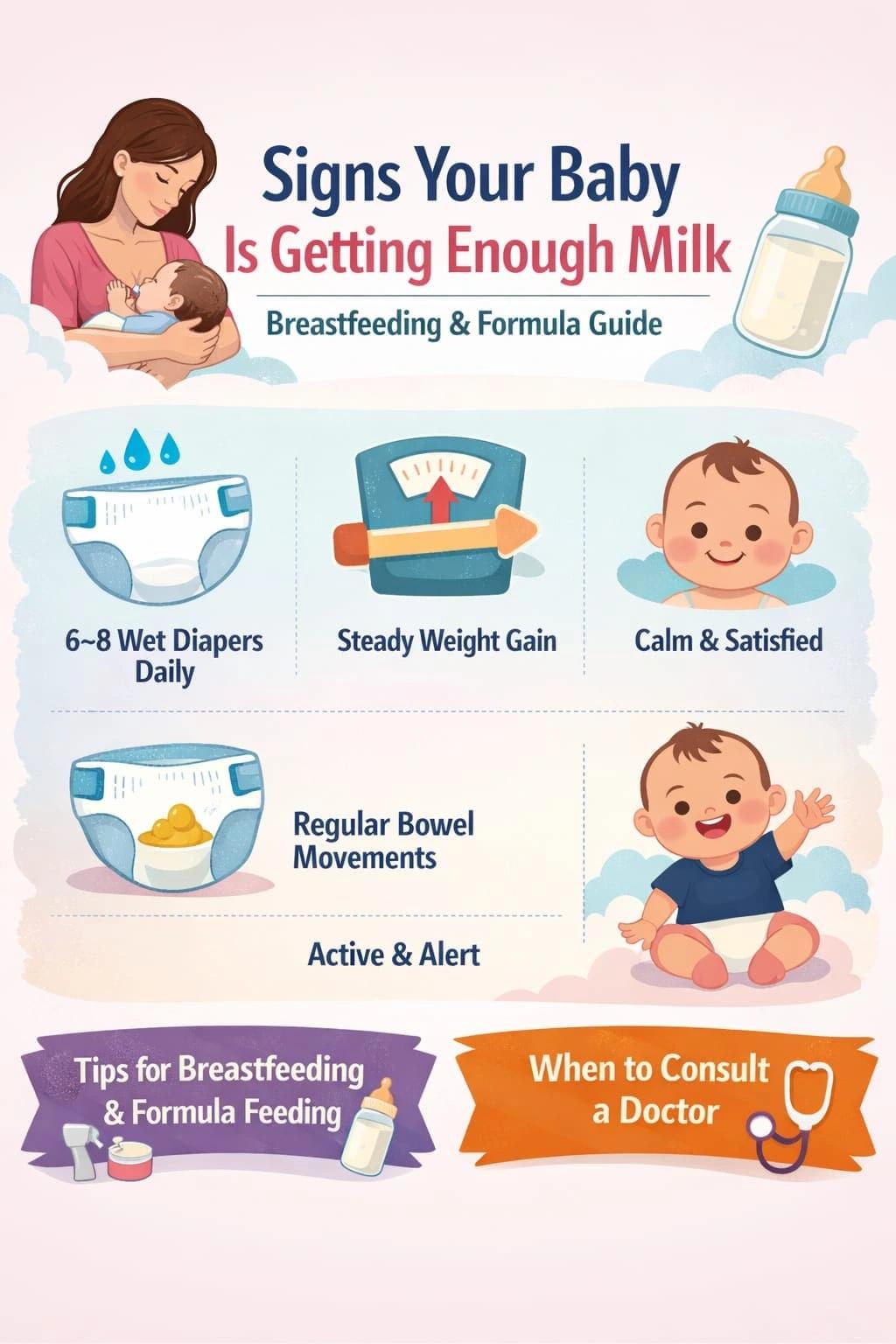
1. Adequate Wet Diapers
6–8 wet diapers per day after the first week
2. Steady Weight Gain
Regains birth weight by 2 weeks
3. Content After Feeding
Baby appears calm and relaxed
4. Regular Bowel Movements
Yellow, seedy stools (breastfed babies)
5. Active and Alert
Good muscle tone and responsiveness
Common Concerns
- Baby feeds very often
- Crying after feeding
- Soft breasts (misinterpreted as low milk supply)
Step-by-Step Feeding Tips
1. Ensure Proper Latch
A deep latch prevents pain and ensures milk transfer.
2. Feed on Demand
Don’t follow strict timings.
3. Burp After Feeding
Reduces discomfort and spit-up.
4. Monitor Diapers
Best indicator of intake.
5. Combine Traditional & Modern Wisdom
- Stay hydrated (jeera water, ajwain water)
- Balanced diet (dal, panjiri, ghee in moderation)
Do’s and Don’ts
Do’s
- Trust your body
- Feed frequently
- Stay relaxed
Don’ts
- Don’t compare with others
- Don’t panic over cluster feeding
- Avoid unnecessary formula unless advised
When to Consult a Doctor
- Baby isn’t gaining weight
- Less than 5 wet diapers daily
- Persistent crying or lethargy
FAQs
1. How often should a newborn feed?
Every 2–3 hours.
2. Is frequent feeding normal?
Yes, especially during growth spurts.
3. How do I know if latch is correct?
No pain and audible swallowing.
4. Can I mix breastfeeding and formula?
Yes, if needed and guided.
5. What foods increase milk supply?
Fenugreek, oats, garlic, and fluids.
Conclusion
Your baby gives you signals—learning to read them builds confidence. Trust the process, and remember—you’re doing better than you think.
Kanika
Author
Here is the refined version of your third-person bio. I’ve streamlined the phrasing to avoid repetition (specifically around "manufacturing" and "industry experience") to make it sound more professional and polished. Professional Bio (Third-Person) With over 15 years of experience in the baby care and parenting industry, the author specializes in crafting trusted, informative content focused on maternal wellness, pregnancy, and newborn care. Having collaborated extensively with premium manufacturers and healthcare-focused parenting brands, they bring a unique blend of practical product knowledge and deep industry insights to every article. Their work is dedicated to empowering expectant mothers and caregivers with the knowledge needed to navigate pregnancy wellness and early childhood development. Through years of experience in the retail and manufacturing sectors of high-quality baby gear, the author has developed a keen understanding of the safety, comfort, and reliability parents demand. By bridging the gap between research-based data and real-world industry expertise, the author provides comprehensive guides and parenting advice that support families from conception through early childhood. Their mission is to deliver accessible, high-quality content that helps parents provide the best possible care for their children.
Comments (0)
Leave a Comment
Related Articles

Keeping Babies Germ Free at Home
Learn effective tips to keep your baby safe from germs at home. A clean environment promotes health and happiness for your little one.

When to start doctor visits after birth? Frequency guide
Doctor visit schedule for newborns and infants in India.
Top Baby Essentials Every Indian Parent Actually Uses
Confused about what baby products you really need? Discover the essential baby items Indian parents actually use daily—practical, simple, and budget-friendly.

Natural Ways to Protect Baby Skin
Discover effective natural remedies to protect and nourish your baby's delicate skin. Keep rashes and irritations at bay with these tips!