How to Soothe a Fussy Baby Without Feeding Every Time
Is your baby crying even after feeding? Learn effective ways to soothe a fussy baby without overfeeding, including simple techniques, common mistakes to avoid, and practical tips for new parents.
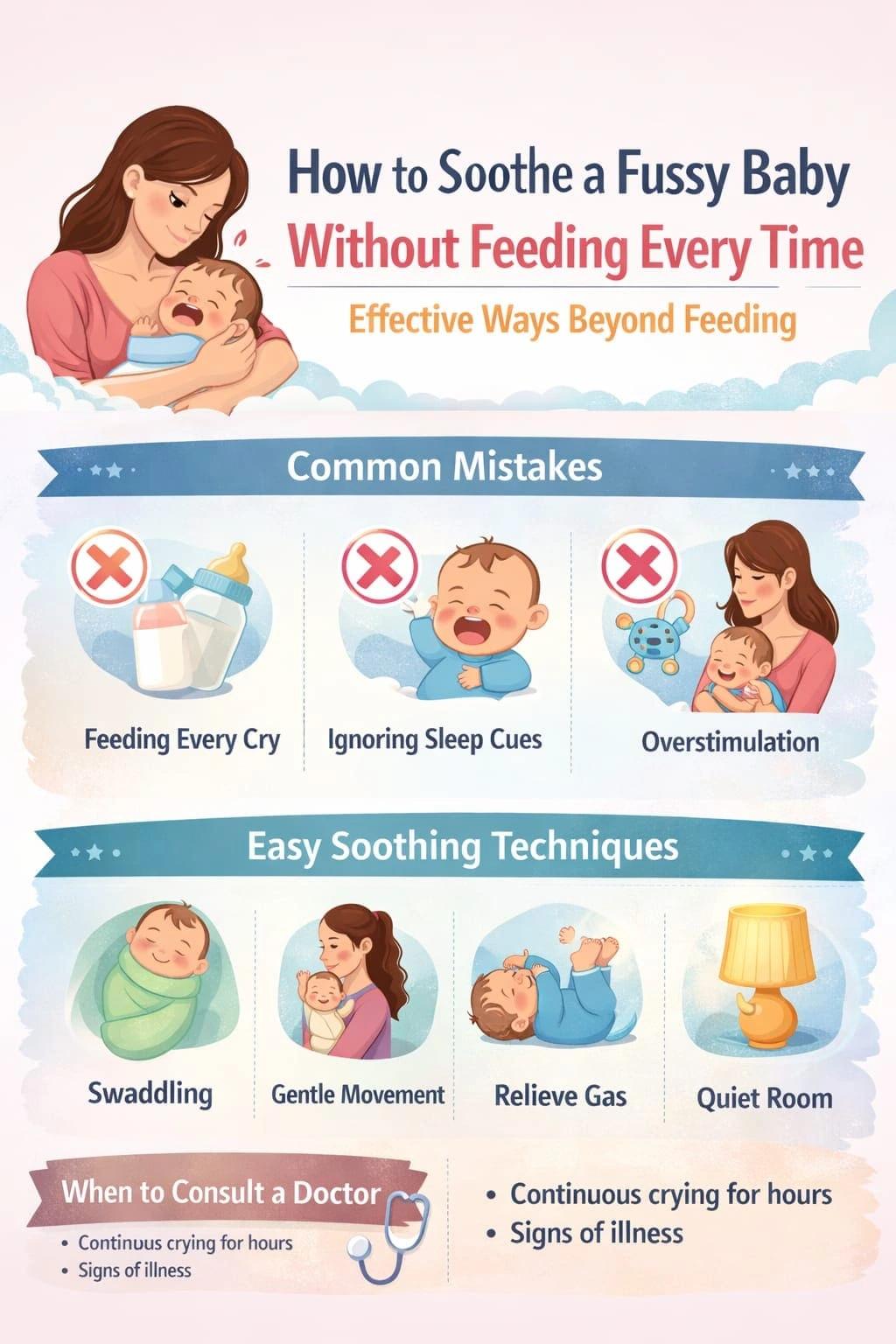
Introduction
When your baby cries, your first instinct is to feed—and while that’s sometimes right, it’s not always the solution. Many babies cry for reasons beyond hunger.
Understanding how to soothe a fussy baby can save you from exhaustion and overfeeding.
Why Babies Get Fussy
Common reasons include:
- Gas or discomfort
- Need for sleep
- Overstimulation
- Desire for comfort
Mistakes Parents Often Make
- Feeding every time baby cries
- Ignoring sleep cues
- Overhandling or overstimulating
Step-by-Step Soothing Techniques
1. Check Basic Needs First
- Diaper
- Temperature
- Hunger
2. Try Movement
- Rocking
- Walking
- Gentle swinging
3. Use Touch & Comfort
- Skin-to-skin contact
- Swaddling
4. Reduce Stimulation
- Dim lights
- Quiet room
5. Gas Relief Techniques
- Bicycle legs
- Gentle tummy massage
6. Traditional Indian Soothing Methods
- Soft lullabies
- Holding baby upright
- Light oil massage
Do’s and Don’ts
Do’s
- Stay calm
- Experiment with soothing methods
- Learn baby’s patterns
Don’ts
- Don’t panic
- Don’t rely only on feeding
- Avoid shaking the baby
When to Consult a Doctor
- Continuous crying for hours
- Signs of illness (fever, vomiting)
- Difficulty calming baby
FAQs
1. Why does my baby cry after feeding?
Could be gas or need to burp.
2. Is it okay to let baby cry?
Short periods are okay, but respond promptly.
3. What is colic?
Frequent, intense crying usually in evenings.
4. Can massage help?
Yes, especially for gas relief.
5. How long does fussiness last?
Usually peaks around 6–8 weeks.
Conclusion
Crying is your baby’s language—not always hunger. The more you understand their cues, the more confident you’ll feel. With time, soothing your baby will become second nature.
Kanika
Author
Here is the refined version of your third-person bio. I’ve streamlined the phrasing to avoid repetition (specifically around "manufacturing" and "industry experience") to make it sound more professional and polished. Professional Bio (Third-Person) With over 15 years of experience in the baby care and parenting industry, the author specializes in crafting trusted, informative content focused on maternal wellness, pregnancy, and newborn care. Having collaborated extensively with premium manufacturers and healthcare-focused parenting brands, they bring a unique blend of practical product knowledge and deep industry insights to every article. Their work is dedicated to empowering expectant mothers and caregivers with the knowledge needed to navigate pregnancy wellness and early childhood development. Through years of experience in the retail and manufacturing sectors of high-quality baby gear, the author has developed a keen understanding of the safety, comfort, and reliability parents demand. By bridging the gap between research-based data and real-world industry expertise, the author provides comprehensive guides and parenting advice that support families from conception through early childhood. Their mission is to deliver accessible, high-quality content that helps parents provide the best possible care for their children.
Comments (0)
Leave a Comment
Related Articles

Keeping Babies Germ Free at Home
Learn effective tips to keep your baby safe from germs at home. A clean environment promotes health and happiness for your little one.

When to start doctor visits after birth? Frequency guide
Doctor visit schedule for newborns and infants in India.
Top Baby Essentials Every Indian Parent Actually Uses
Confused about what baby products you really need? Discover the essential baby items Indian parents actually use daily—practical, simple, and budget-friendly.

Natural Ways to Protect Baby Skin
Discover effective natural remedies to protect and nourish your baby's delicate skin. Keep rashes and irritations at bay with these tips!