The Stability First Guide: Which Scooter Style is Right for Your Child’s Stages?
The Stability First Guide: Which Scooter Style is Right for Your Child’s Stage?
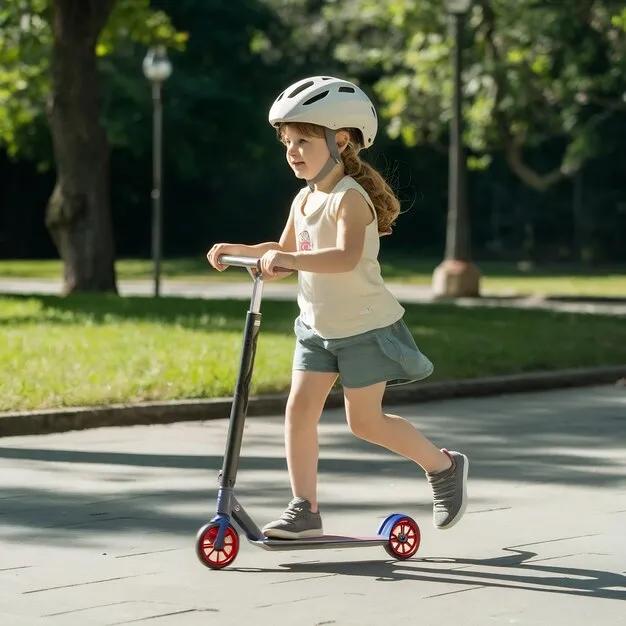
The Stability First Guide: Which Scooter Style is Right for Your Child’s Stage?
Introduction: Finding Their Balance
In the Mamaverse, seeing your child take off on their first scooter is a proud (and slightly nervous) moment. Before they can master the speed, they have to master the balance. Choosing a StarAndDaisy kids scooter means selecting a frame designed for maximum stability, ensuring their first "ride" is a confident one.
1. The 3-Wheel "Lean-to-Steer" Advantage
For toddlers and preschoolers (ages 2–5), a 3-wheel design is the gold standard.
- Self-Standing Stability: Unlike 2-wheelers, a 3-wheel StarAndDaisy scooter stays upright on its own. This allows a child to step on and off without the scooter falling over, reducing frustration.
- Intuitive Steering: Look for "Lean-to-Steer" technology. Instead of turning the handlebars like a bike, children lean their body weight. This mimics the natural way children move and helps develop their core balance and coordination.
2. Deck Width and Anti-Slip Features
The "deck" is where your child’s feet live. When buying, check the width. A wider deck, like those found on StarAndDaisy models, allows children to easily place both feet on the board while gliding.
- Grip Tape: Ensure the deck has a high-friction, anti-slip surface. This is crucial for safety, especially if they happen to ride through a small puddle or on a damp morning.
3. Wheel Quality: PU vs. Plastic
As a supportive peer, I always recommend looking for High-Rebound PU (Polyurethane) wheels over cheap plastic ones.
- Shock Absorption: PU wheels act like tiny tires, absorbing the bumps from uneven sidewalks.
- LED Visibility: Many StarAndDaisy scooters feature kinetic-powered LED wheels. These aren't just for "cool factor"—they make your child highly visible to other pedestrians and cyclists as the sun starts to set.