Why Your Baby's Sleep Environment Matters More Than Any Sleep Training Method
Before you try any sleep method, look at where your baby sleeps. Temperature, light, sound, and safety all shape how well your baby rests — and how well you do too.
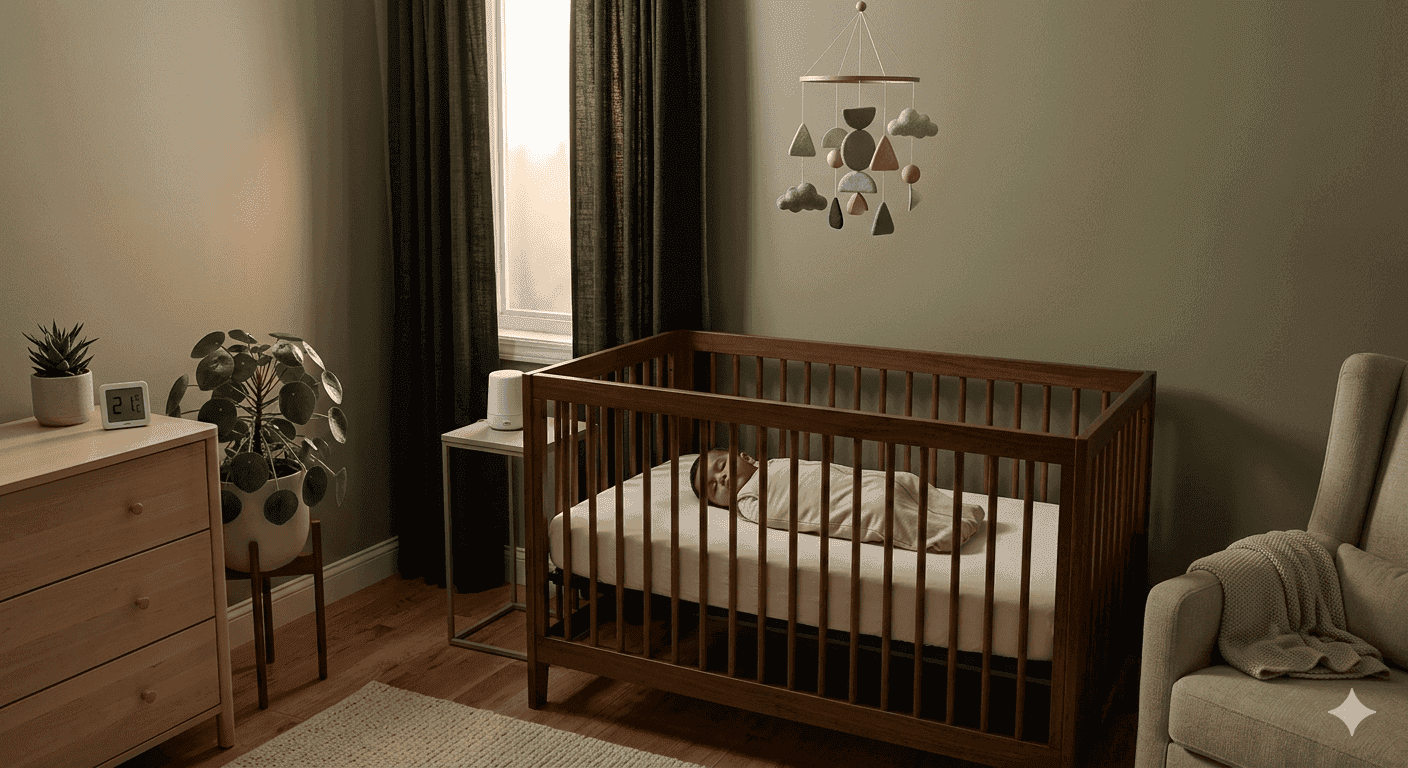
Why Your Baby's Sleep Environment Matters More Than Any Sleep Training Method
Every few months, a new sleep training method dominates the parenting internet. Ferber. No-cry. Chair method. Pick up, put down. Parents try them all, often exhausted enough to attempt anything. What fewer people talk about — and what often makes the biggest difference — is not the method. It's the room.
Where a baby sleeps shapes how they sleep. The temperature, the darkness, the noise level, the surface they lie on — these are the conditions that either support or fight against your baby's natural sleep rhythms. Getting the environment right doesn't guarantee a sleeping-through-the-night miracle. But it removes the friction that keeps otherwise-tired babies from settling.
The Safe Sleep Basics Every Indian Parent Needs to Know
Safe sleep guidelines exist because Sudden Infant Death Syndrome (SIDS) is real, and most risk factors are environmental. The international consensus — backed by every major paediatric body — is firm:
- Always place baby on their back to sleep, on a firm, flat surface.
- No loose bedding, pillows, bumpers, or soft toys in the sleep space.
- The sleep surface should have no gaps between the mattress and the cot sides.
- Room-sharing (baby in their own cot in the parents' room) reduces SIDS risk — bed-sharing does not.
- Keep the room smoke-free always.
These are not suggestions. They are the foundation of every safe sleep setup, regardless of what else you do.
Temperature: The Most Overlooked Factor
Babies cannot regulate their own body temperature effectively. An overheated baby is both uncomfortable and at increased SIDS risk. An overcooled baby will wake frequently from discomfort. The ideal room temperature for infant sleep is between 20–22°C — cooler than most Indian families keep their rooms, particularly in summer.
The rule of thumb: dress baby in one more layer than you're comfortable in. Check the back of their neck — it should feel warm but not sweaty. Avoid thick blankets; a well-fitted sleep sack or swaddle is far safer and more temperature-appropriate than loose bedding.
Darkness and Light: Working With Baby's Circadian Rhythm
Newborns arrive with no established circadian rhythm — the internal clock that tells us when to sleep and when to wake. It develops over the first few months, and light is the primary signal that sets it.
Darkness during night sleep and bright light during morning wake windows helps establish this rhythm faster. Blackout curtains or a dark room for naps signal “this is sleep time” consistently. A gradual increase in morning light signals “this is wake time.” Over weeks, baby's biology begins to respond.
Where Baby Sleeps: Cot, Bassinet, or Co-Sleeper?
The ideal sleep space for newborns is a firm, breathable bassinet or cot placed within arm's reach of the parents' bed — close enough for quick night feeds, far enough to eliminate bed-sharing risks. Many families use a bedside bassinet in the early weeks and transition to a cot in the nursery around 3–6 months.
A well-designed nursery cot with the right mattress does most of the environmental work for you. If you're still setting up your sleep space, browse this range of nursery cribs and sleep essentials — compact, safe designs built for Indian homes and newborn sleep.
Sound: White Noise, Silence, or Something In Between?
Babies spent nine months in the womb surrounded by constant sound — blood rushing, organs working, voices filtering through. Complete silence is not, for most newborns, the comforting environment we imagine it to be. This is why many parents find that white noise — a consistent, low-level sound — helps babies settle and stay asleep longer.
A fan, an air purifier, or a dedicated white noise machine all work. The key is consistency and volume (no louder than a shower — around 65 decibels at the source).
The Sleep Environment Checklist
- Room temperature 20–22°C
- Dark room (blackout curtains or cover for light gaps)
- Firm, flat mattress — no softness, no incline
- Baby on their back, always
- No loose items in the cot
- White noise if baby is a sensitive sleeper
- Sleep sack or swaddle instead of blankets for newborns
Set the environment right and then — only then — try the method. You might find the method matters far less than you expected.
Frequently Asked Questions
Kanika
Author - Parenting and Maternal Wellness
Hi, I’m Kanika, a parenting and maternal wellness writer at Mamaverse. I’m passionate about creating clear, practical, and thoughtfully researched content that helps parents feel more informed and confident throughout their parenting journey. I write about pregnancy, newborn care, baby development, toddler care, child development, parenting challenges, and family well-being. Before creating content, I focus on understanding the topic carefully and referring to reliable and authoritative sources, especially when the subject involves health, safety, or child development. Through Mamaverse, my goal is to simplify overwhelming parenting information into guidance that is easy to understand and useful in everyday life. I also believe that every pregnancy, child, and family is different, so my content is designed to educate and support—not replace personalized advice from qualified healthcare professionals. My Areas of Focus: Pregnancy, Maternal Wellness, Newborn Care, Baby Care, Toddler Care, Child Development, Parenting, and Family Well-being
Comments (0)
Leave a Comment
Related Articles

Baby Feeding Schedule for Newborns (0-6 Months Guide)
Navigating your newborn's feeding schedule can be challenging. Discover essential tips and insights for feeding your baby from 0 to 6 months.
The Ultimate Baby Essentials Checklist for New Parents
Navigating the world of baby products? Our ultimate essentials checklist helps new parents prepare for their little one's arrival with ease.

Newborn umbilical cord care: do's & don'ts
Proper care for your baby's umbilical cord stump.

Must-Have Newborn Care Essentials for First-Time Parents
Discover essential newborn care items every first-time parent needs for their little one. Make your parenting journey smoother and more joyful!