Why Messy is Good: The Sensory Science Behind Playing with Spoons and Plates
Why Messy is Good: The Sensory Science Behind Playing with Spoons and Plates
Why Messy is Good: The Sensory Science Behind Playing with Spoons and Plates
The Laboratory on the High Chair
To a parent, a baby smearing pumpkin puree across their face and banging their silicone spoon on the tray looks like chaos. To a developmental scientist, this is a high-level laboratory experiment. Before a baby can comfortably eat a variety of textures, they must first understand them through touch. At Mamaverse, we’re diving into why "Messy Eating" is a vital developmental milestone and how your choice of feeding gear can support this sensory journey.
1. Texture Desensitization: The "Tactile-to-Oral" Bridge
The mouth is one of the most sensitive parts of the body. If a baby isn't allowed to touch their food with their hands first, the introduction of a new texture to the tongue can trigger a "fight or flight" response (the gag reflex).
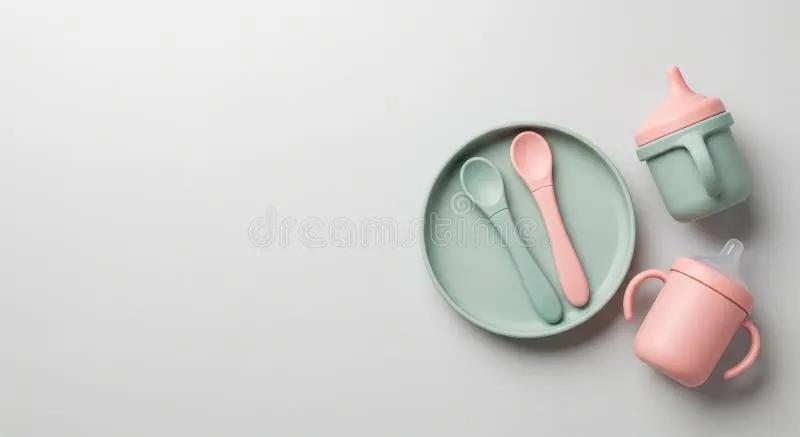
By using a StarAndDaisy divided plate, you provide a stable "palette" where a baby can explore textures individually. Touching a "slimy" peach or a "grainy" cereal with their fingers sends signals to the brain that this substance is safe. This reduces Tactile Defensiveness, making them more likely to accept the spoon when it finally arrives at their lips.
2. Acoustic Feedback: The "Banging" Phase
Have you noticed your baby loves to drum their feeding spoon against their suction bowl? This isn't just for noise. It’s about Proprioceptive Feedback.
The vibration felt in the hand when a StarAndDaisy silicone spoon hits a surface tells the brain about the density of objects. Silicone is an ideal material here because it absorbs shock. The formula for the energy absorbed is:
$$E = \frac{1}{2} k \Delta x^2$$
Where $k$ is the elasticity of the silicone. This "soft" feedback is gentler on a baby's developing joints than hard metal or plastic, allowing them to experiment with force and distance safely.
3. Color Psychology and Appetite
Did you know the color of your baby's plate can influence their willingness to try new things?
- Warm Tones (Red/Yellow/Orange): These colors are known to stimulate appetite and mimic many "first foods" like carrots and squash.
- Cool Tones (Blue/Green): These can be calming, which is helpful for a baby who feels anxious during mealtime transitions.
4. Hand-Eye Coordination and the "Target"
Feeding is the ultimate coordination test. The baby must track the spoon, open their mouth at the right time, and manage the weight of the utensil. A suction bowl acts as a "Fixed Target." If the bowl moves, the baby has to recalibrate their visual tracking constantly. By keeping the plate stationary, StarAndDaisy allows the baby to focus 100% of their cognitive load on the hand-to-mouth connection.
Conclusion
Embrace the mess! Every smear of food and every bang of the spoon is a brain cell connecting. By providing the right sensory tools—from soft-touch silicone to stationary suction bases—you are turning mealtime into a masterclass of development. Check out the sensory-friendly feeding range at StarAndDaisy and let the learning (and the mess) begin.