The Graduation Guide: Transitioning Your Toddler from Playpen to Room-Roaming
The Graduation Guide: Transitioning Your Toddler from Playpen to Room-Roaming
The Graduation Guide: Transitioning Your Toddler from Playpen to Room-Roaming
Introduction: When the "Safe Zone" Becomes Too Small
In the Mamaverse, a baby playpen is a sanctuary for the first 12 to 18 months. It’s where your baby learns to sit, crawl, and pull themselves up in a controlled, padded environment. But eventually, your little explorer will start eyeing the "Great Beyond"—the rest of your living room. Knowing when and how to transition from the confinement of a playpen to independent room-roaming is a major developmental milestone.
This 1500-word guide helps you navigate the "Graduation Phase." We will discuss the signs that your child is ready for more space, how to "deconstruct" your StarAndDaisy modular playpen to create room dividers, and why safety-proofing the wider room is the next logical step. At Mamaverse.co, we celebrate every step toward independence.
1. Signs of Playpen "Graduation"
How do you know it’s time to open the gate?
- The Great Escape: If your child is attempting to climb over the mesh or rails of their nursery playpen, it is no longer a safe enclosure. This is the primary sign that they need more vertical and horizontal space.
- Frustration vs. Focus: If your toddler spends more time crying at the gate than playing with their toys, they likely feel "contained" rather than "safe."
- Walking Proficiency: Once a child is walking confidently, they require more "runway" to develop their gross motor skills than a standard playpen can provide.
2. Using the "Open Gate" Policy
You don't have to remove the playpen all at once.
The Home Base Strategy: Start by leaving the door of your StarAndDaisy play center open during the day. This allows the toddler to wander out to explore, but return to their "safe zone" when they feel overwhelmed or want to play with their favorite familiar toys. This gradual exposure builds confidence without the stress of a sudden change.
3. Repurposing Modular Panels
Don't put that playpen in the attic just yet!
Room Dividers: Many StarAndDaisy modular playpens can be disassembled into long fences. Use these panels to block off "no-go zones" like the TV console, fireplace, or the kitchen entrance. This creates a "Yes Space"—a larger room where the toddler can roam freely while the dangerous areas remain secured behind a sturdy barrier.
4. The Playmat’s New Role: The Anchoring Point
Even if the playpen is gone, the mat should stay.
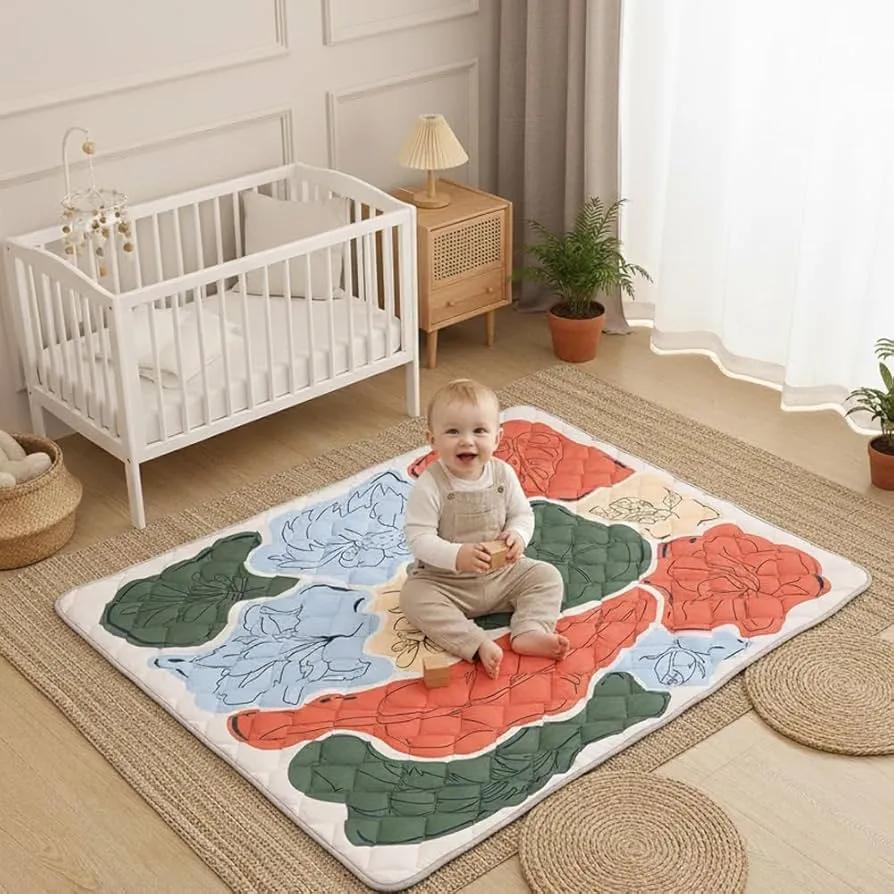
- Thermal Comfort: As the toddler roams the wider room, they will still need a soft place to land. Moving your StarAndDaisy XPE playmat to the center of the room provides a designated "play island" that protects them from cold floors.
- Visual Boundaries: Toddlers respond well to visual cues. Teaching them that "messy toys stay on the mat" helps maintain order in the house even after they’ve graduated to room-roaming.