Rolling Through Time: How the Stroller Revolutionized Parenting and Reshaped Society
Rolling Through Time: How the Stroller Revolutionized Parenting and Reshaped Society
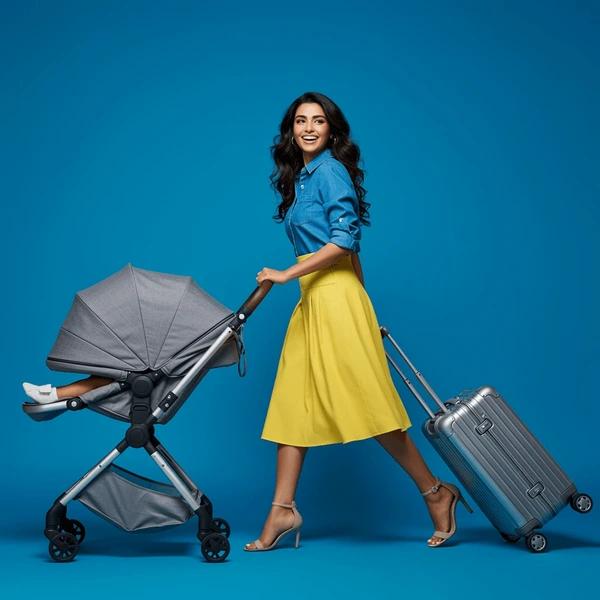
Rolling Through Time: How the Stroller Revolutionized Parenting and Reshaped Society
The Aristocratic Origins: When Prams Were Ponies
Before the 1700s, baby transport was limited to the strength of a parent’s back or a simple cloth sling. The "stroller" as we know it didn't begin as a tool of convenience, but as a masterpiece of landscape architecture. In 1733, William Kent—a renowned garden designer—was commissioned by the Duke of Devonshire to create a vehicle for his children. The result? A shell-shaped, ornate basket on wheels designed to be pulled by a goat or a pony. It was a status symbol, a "miniature carriage" that signaled wealth long before it signaled practicality.
At Mamaverse, we look back at these origins to understand how the baby pram eventually became an essential tool for every family, bridging the gap between royalty and the modern urban parent.
The Victorian Shift: From Pulling to Pushing
The 19th century brought a radical shift in perspective. As cities grew and pavements were laid, the "pony-drawn" model gave way to the "parent-pushed" design. Charles Burton’s Perambulator (the origin of the word "pram") initially faced skepticism in Britain until Queen Victoria herself purchased three of them. Almost overnight, the stroller became a symbol of modern motherhood. This shift allowed mothers more independence, moving them from the confines of the home into the public parks of the Victorian era.
[Image: A vintage sketch of a high-wheeled Victorian Perambulator next to a modern StarAndDaisy stroller for comparison]The Engineering Revolution: William H. Richardson
While European royalty popularized the pram, it was an African American inventor named William H. Richardson who truly "engineered" the modern experience. In 1889, he patented a design that changed everything:
- The Reversible Seat: For the first time, parents could choose to have their baby face them or face the world.
- Independent Axles: Richardson moved away from solid axles, allowing each wheel to move independently, which drastically reduced the turning radius.
The Jet Age and the Umbrella Fold
Post-WWII, the world became more mobile. In 1965, aeronautical engineer Owen Maclaren used his knowledge of airplane landing gear to create the first aluminum-framed umbrella stroller. This was the death of the heavy, bulky carriage and the birth of the "travel system." Modern parents using the StarAndDaisy app benefit from this lineage—strollers that are light enough to carry with one hand but strong enough to support a growing toddler.
Conclusion: More Than Just Wheels
The stroller is more than a piece of baby gear; it is a historical marker of parental freedom and child safety. From the goat-drawn shells of the 1700s to the sleek, multi-terrain StarAndDaisy models of today, the goal has remained the same: to keep the family moving forward. Next time you head out for a walk, remember that you are part of a 300-year legacy of innovation.