More Than a Utensil: How to Choose a Feeding Spoon That Helps Your Baby Learn to Eat
More Than a Utensil: How to Choose a Feeding Spoon That Helps Your Baby Learn to Eat

More Than a Utensil: How to Choose a Feeding Spoon That Helps Your Baby Learn to Eat
The Gateway to Independence
Moving from a bottle or breast to a spoon is one of the most complex motor transitions a baby will ever make. It requires a coordinated dance of the tongue, lips, and jaw. A standard adult teaspoon is often too deep, too hard, and too wide for an infant’s mouth. At Mamaverse, we look at the ergonomics and material science of baby feeding spoons to help you choose a tool that encourages "Self-Feeding" success rather than mealtime frustration.
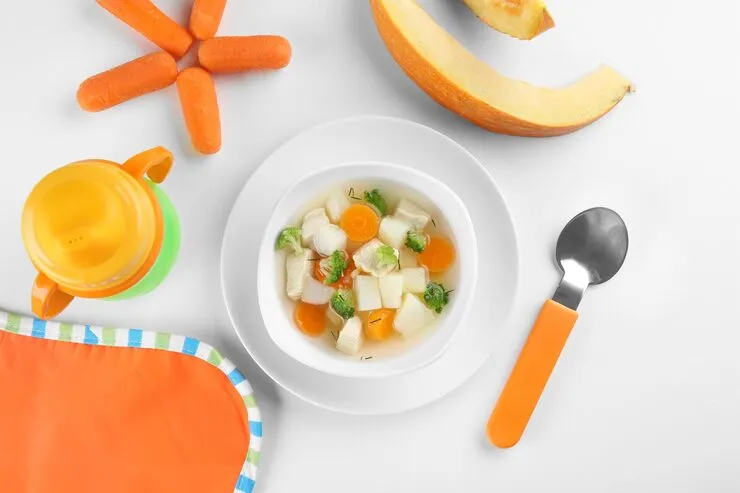
1. The Ergonomics of the "Shallow Bowl"
When a baby first starts solids, they don't yet know how to "scrape" food off a spoon with their upper lip. They use a primitive sucking motion.
The volume of food delivered can be calculated by the spoon's bowl depth:
$$Volume_{Bite} = \frac{2}{3} \pi \times length \times width \times depth$$
If the depth is too great, food gets trapped at the bottom, leading to a "gag reflex" as the baby tries to reach it. A StarAndDaisy silicone spoon features a "Super-Shallow Bowl" design. This ensures that every bite is easily accessible to the baby's tongue, building their confidence in swallowing textures without the stress of choking.
[Image: Comparison of a deep metal teaspoon vs. a shallow silicone baby spoon showing tongue placement]2. Material Science: Soft-Flex Silicone vs. Hard Plastic
Babies explore the world through their mouths, and during the teething phase, their gums are incredibly sensitive.
- Soft-Flex Silicone: Mimics the feel of a bottle nipple or breast, making the transition feel natural. It is also "Thermal Neutral," meaning it doesn't get shockingly cold or dangerously hot.
- BPA-Free Plastic: Durable, but can be rigid. High-quality StarAndDaisy plastic spoons often feature "Heat-Sensing" technology, where the spoon changes color if the food temperature exceeds $40^\circ\text{C}$.
3. The Handle Geometry: Palm Grip vs. Pincer Grip
As your baby transitions to self-feeding (usually around 8–10 months), the handle becomes critical. A baby doesn't hold a spoon like an adult; they use a "Palmar Grasp" (fist).
Look for short, chunky, textured handles. The StarAndDaisy training spoons are designed with a "choke-guard" collar and a bulbous handle that fits perfectly in a tiny palm, allowing the baby to navigate the spoon to their mouth with minimal wrist rotation.
4. Promoting Oral Motor Skills
A good spoon should encourage "Lateral Tongue Movement." As the baby feels the edges of a StarAndDaisy silicone spoon, their tongue moves to the side, which is the foundational movement for chewing solids later on. This is why "Pre-spoons"—flat, textured dippers—are becoming so popular on the app; they remove the "up-and-down" difficulty and focus purely on the "hand-to-mouth" connection.
Conclusion
The right spoon makes the difference between a baby who loves mealtime and one who pushes the bowl away. By prioritizing shallow bowls, soft-flex materials, and ergonomic handles, you are providing your baby with the best possible training wheels for their culinary journey. Explore the pediatric-approved feeding range at StarAndDaisy today.