How Unstructured Play Builds the Brain — and Why Your Child Needs More of It
In a world of flashcards, structured classes, and screen-based learning, unstructured free play is quietly becoming the most underrated thing you can give your child. Here's the science behind it.
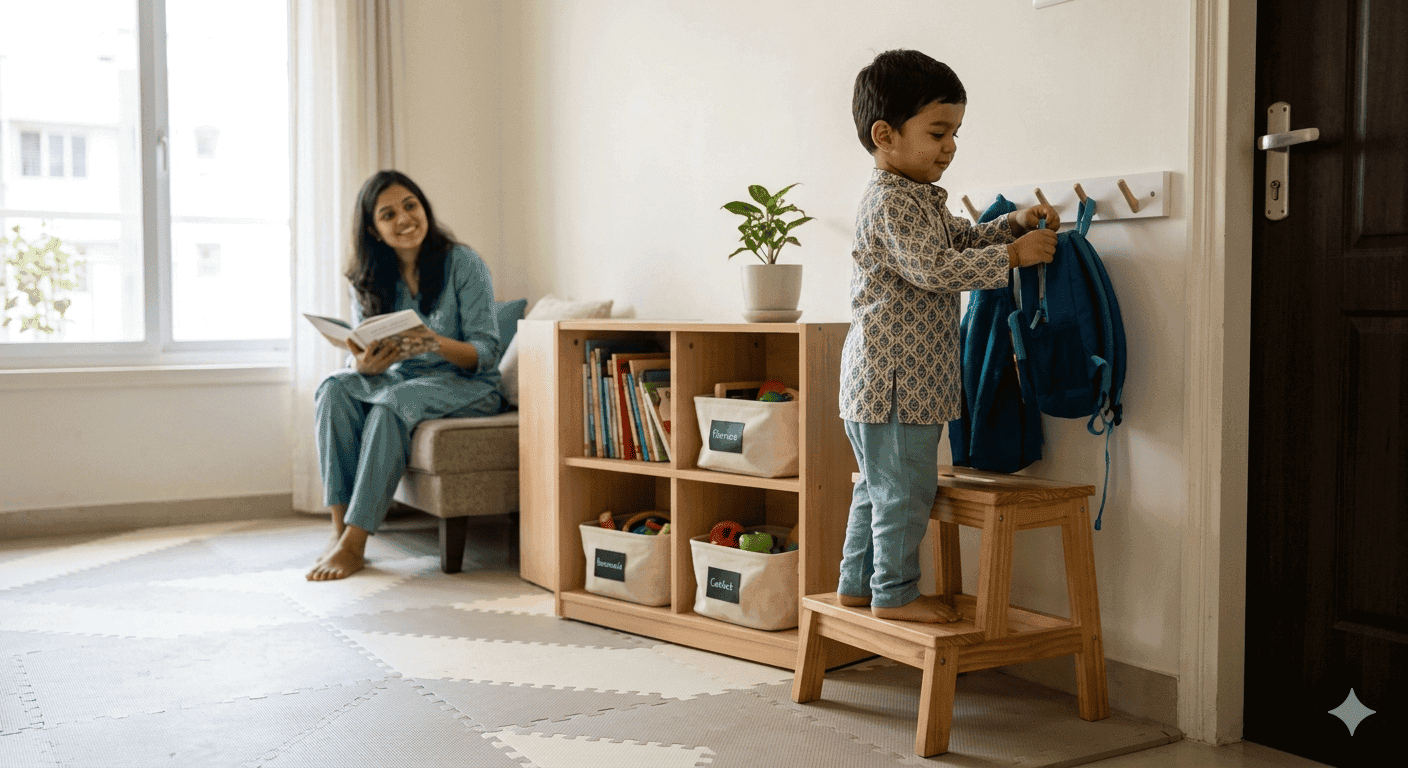
How Unstructured Play Builds the Brain — and Why Your Child Needs More of It
We have become, as a generation of parents, deeply uncomfortable with boredom. When a child says “I'm bored,” the instinct is to fill the gap immediately — a tablet, a class, a structured activity, something educational. Something with a purpose.
But developmental neuroscience is increasingly clear on this: boredom is not a problem to be solved. It is a condition for creativity. And unstructured play — the kind where a child decides what to do, makes up the rules, and pursues it entirely on their own terms — is one of the most powerful brain-building activities available to a child.
What Does “Unstructured Play” Actually Mean?
Unstructured play is child-led, open-ended, and purposeless in the best possible sense. It has no goal other than play itself. There is no adult directing it, no correct outcome, no progress to measure. A child turning a cardboard box into a spaceship. Two toddlers negotiating the rules of an imaginary restaurant. A baby exploring what happens when they drop a spoon, retrieve it, and drop it again.
It looks like chaos. It is, in fact, the highest-order cognitive work a young child can do.
What the Research Shows
The science of play has been building for decades. Key findings:
- Children who engage in more unstructured play show significantly better executive function — the set of mental skills that includes working memory, flexible thinking, and self-control.
- Free play is one of the primary contexts in which children develop the ability to regulate their emotions — a skill more predictive of long-term wellbeing than academic scores.
- Problem-solving skills developed through play transfer to academic contexts more effectively than direct instruction in the same skills.
- Children who play freely with peers develop stronger theory of mind — the ability to understand that other people have different thoughts, feelings, and perspectives.
None of this happens in a structured class. It happens on a play mat, in a garden, in an imaginary world built from cushions and blankets.
Why Indian Children Are Getting Less of It
Academic pressure starts early in India. By the time a child is three, many families are weighing preschool options, activity classes, and “educational” toys. The intention is entirely loving — parents want to give their children every advantage. But the unintended consequence is a childhood with fewer and fewer open hours.
Research from across Asia shows that children in high-academic-pressure environments who have less free play time show higher rates of anxiety, lower creativity scores, and reduced intrinsic motivation to learn. The drive to learn — the joy of figuring something out — is built in play, not worksheets.
Creating the Right Environment for Free Play at Home
You don't need to do anything elaborate. You need to do less, and provide the right space.
- Designate a safe floor area where the child can move freely, explore, and make a mess without constant correction.
- Offer open-ended materials: blocks, fabric, containers, simple art supplies — things with no single correct use.
- Resist the urge to direct. Observe, but don't organise.
- Protect unstructured time in the weekly schedule the same way you'd protect a class or appointment.
A safe, dedicated play space is often the single most useful physical investment a parent can make — not a toy, but a place. A well-cushioned, bounded area where baby and toddler can explore freely without constant risk-checking.
If you're building that space at home, explore this range of play mats and playpens — designed to give children a safe, stimulating world to move and discover in.
Your Role in Unstructured Play
It is smaller than you think. Your job is to provide the space, the time, and — occasionally — a nearby presence that signals safety. It is not to enrich, direct, or improve the play. The moment you say “why don't you try it this way,” the play stops being the child's and starts being yours.
The hardest part for most parents isn't providing the space. It's tolerating the apparent purposelessness of it. Sitting with the discomfort of a child who is “just” playing, “just” exploring, “just” sitting quietly with a cardboard tube — and trusting that this is enough.
It is more than enough. It is, in fact, exactly what the developing brain needs most. And if you want to support that physical freedom further, this collection of baby safety and play essentials helps you childproof the space so you can step back with genuine peace of mind.
Frequently Asked Questions
Comments (0)
Leave a Comment
Related Articles
Baby Feeding Made Easy: How to Choose the Right High Chair for Your Baby
The first time I placed my baby in a high chair, it felt like a milestone—until the food started flying. Choosing the right high chair can make mealtimes safer, easier, and far less chaotic.

The Art of Gentle Weaning: Moving from Milk to Solids Smoothly
The day I offered my daughter her first spoonful of rice water, she looked at me like I had personally betrayed her. By week three, she was grabbing the spoon. Weaning is a journey, not a deadline.
Healthy Diet Chart for Toddlers
Discover a nutritious diet chart tailored for toddlers that ensures balanced meals. Learn how to make mealtime enjoyable and healthy!

Best Baby Carriers in India 2026: Types, Safety & Buying Guide
A good baby carrier is your hands-free parenting superpower. But with so many types available in India, choosing the right one can be overwhelming. This guide makes it simple.