How to Get a Toddler to Sleep (And How Much Sleep Do They Need Anyway?)
Bedtime battles? Learn exactly how much sleep your toddler needs and discover 4 proven strategies to get them to stay in bed and sleep through the night.
How to Get a Toddler to Sleep (And How Much Sleep Do They Need Anyway?)
At Mamaverse, we know that toddler sleep is a whole different ballgame compared to the newborn stage. It’s no longer just about hunger; it’s about a little person discovering their own "will" and testing every boundary you have.
But here’s the thing: sleep is the fuel for your toddler’s massive brain growth and physical energy. Understanding how much they need—and how to actually get them to take it—is the key to a happier house.
How Much Sleep Does a Toddler Actually Need?
Sleep needs change rapidly as they transition from babies to preschoolers. While every child is different, here are the general guidelines for total sleep (overnight + naps) in a 24-hour period:
- 1 to 2 Years Old: 11 to 14 hours total. Most toddlers at this age transition from two naps to one long afternoon nap.
- 3 to 5 Years Old: 10 to 13 hours total. Many children begin to "drop" their daytime nap, though they still benefit from "quiet time."
The Sign of a Well-Rested Toddler: If your child wakes up on their own and is generally in a good mood for most of the day, they are likely hitting their sleep sweet spot.
4 Proven Strategies to Get a Toddler to Sleep
If bedtime is a battle, try these expert-backed strategies to reclaim your evening.
1 The "Visual Schedule" Trick
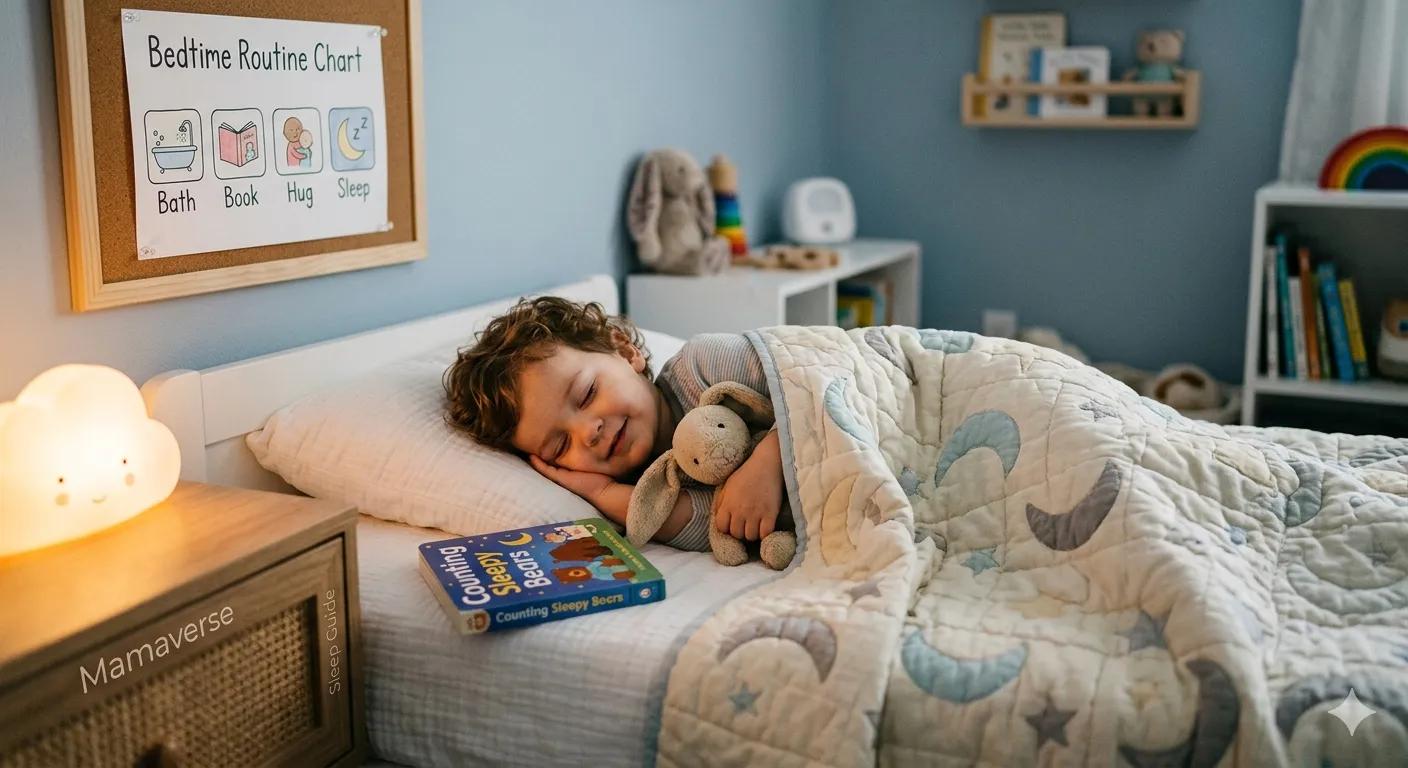
Toddlers love knowing what comes next—it gives them a sense of control. Create a simple chart with pictures: Bath → Pajamas → Brush Teeth → Story Time → Hugs → Lights Out.
Why it works: When they ask for "one more story," you can point to the chart and say, "The chart says it's hug time now!" It makes the routine the "boss" instead of you.
2 Master the "Bedtime Pass"
For the toddler who constantly gets out of bed for "emergencies," give them a physical card or "Pass."
The Rule: They can trade the pass in for one extra request—a drink, a trip to the potty, or an extra kiss. Once the pass is gone, it’s gone. If they keep the pass until morning, they get a small reward (like a sticker).
3 Use an "Okay-to-Wake" Light
Since toddlers can't tell time, they don't know if 5:00 AM is "morning" or not. Use a color-changing clock.
The Rule: "If the light is Red, stay in your bed. If the light is Green, you can come see me!" This creates a clear boundary for when the day starts.
4 The 10-Minute Wind-Down
Often, we expect toddlers to go from high-energy play to deep sleep instantly. Their brains don't work that way.
The Strategy: Ten minutes before the official routine starts, dim the lights and turn off all screens. Transition to quiet play like puzzles or coloring to signal the nervous system to start producing melatonin.
Common Toddler Sleep Hurdles
Night Terrors vs. Nightmares: Nightmares happen during REM sleep, and the child can be comforted. Night terrors happen in deep sleep; the child may look awake but is unresponsive. Tip: During a terror, stay calm, keep them safe, and do not try to wake them.
The Big Bed Transition: Don't rush the move from a crib! If they aren't climbing out, keep them in the crib as long as possible (ideally until age 3) to help them feel secure.