From Sidewalk to Classroom: How Scooting Prepares Your Child for School
From Sidewalk to Classroom: How Scooting Prepares Your Child for School
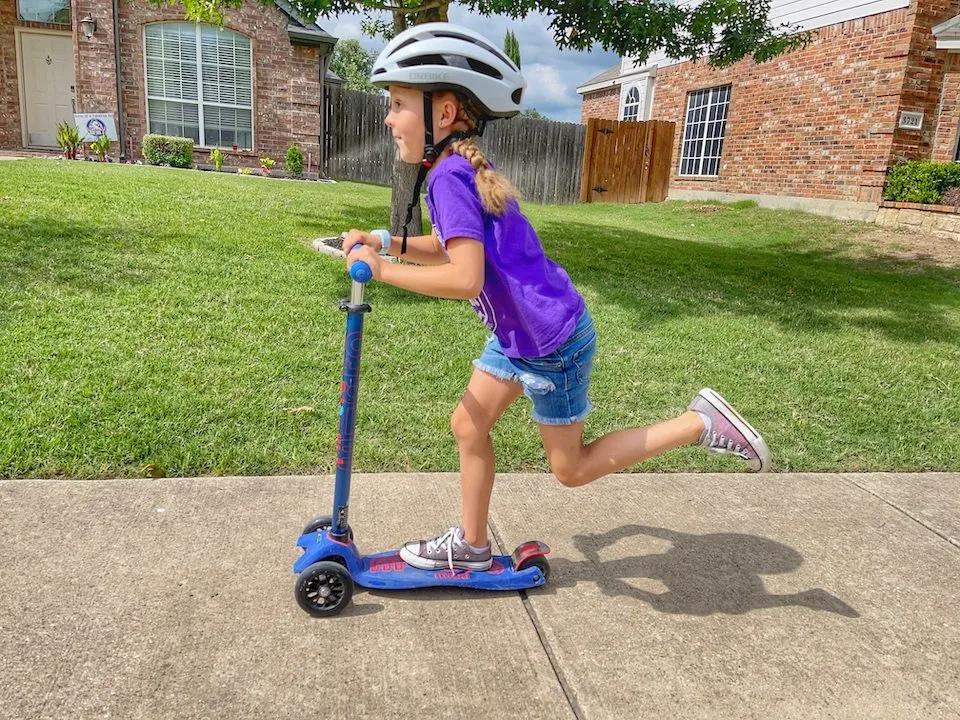
From Sidewalk to Classroom: How Scooting Prepares Your Child for School
In the Mamaverse, we look at the hidden links between physical play and academic readiness. The skills learned on a scooter deck often show up at the school desk.
1. Strengthening the "Focus Muscle"
To ride a scooter safely, a child must maintain Sustained Attention. They have to keep an eye on the path, listen for sounds behind them, and coordinate their limbs simultaneously. This level of concentration is a direct workout for the brain's executive functions. Children who regularly engage in the focused movement required by a StarAndDaisy scooter often show improved attention spans and better "on-task" behavior when they eventually transition to a classroom environment.
2. The Link Between Balance and Literacy
It sounds surprising, but the vestibular system (responsible for balance) is closely linked to the ocular-motor system (responsible for eye tracking). As a child balances on a StarAndDaisy scooter, they are actually training their eyes to stabilize while the body is in motion. This ability to track smoothly is the exact same skill needed to follow a line of text across a page without skipping words. Physical balance truly is the foundation for visual literacy.
3. Sequencing and Multi-Step Thinking
Riding a scooter isn't just one action; it’s a sequence: Hold the handles → Place one foot → Push with the other → Balance → Brake. Mastering this "Task Sequencing" helps children understand the concept of steps and order. When they use their StarAndDaisy scooter, they are practicing the logical flow of information that they will later use to follow instructions for a craft project or solve a math problem.
4. Crossing the Midline and Brain Integration
Many movements in scooting require a child to "cross the midline"—using one side of the body to perform a task on the other side. Steering a StarAndDaisy lean-to-steer model encourages the left and right hemispheres of the brain to communicate more effectively. This bilateral integration is vital for complex tasks like writing, cutting with scissors, and even physical activities like swimming or gymnastics later on.