Beyond Eco-Friendly: Why Switching to Cloth is a Game-Changer for Your Baby’s Skin Health
Beyond Eco-Friendly: Why Switching to Cloth is a Game-Changer for Your Baby’s Skin Health

Beyond Eco-Friendly: Why Switching to Cloth is a Game-Changer for Your Baby’s Skin Health
The Chemical Cocktail in Disposables
Most parents choose reusable cloth diapers to save money or the planet, but the most immediate benefit is often seen on the baby’s skin. The average infant will wear a diaper for roughly 22,000 hours before potty training. In this Mamaverse guide, we look at the dermatology and thermal science behind cloth diapers and why they are the "breathable" choice for sensitive newborns.
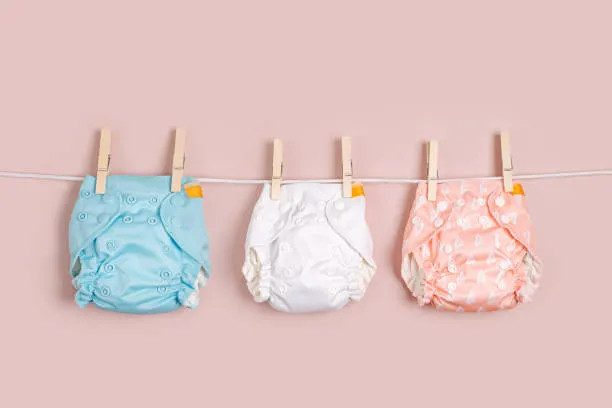
1. The Breathability Factor and Scrotal Temperature
Disposable diapers are engineered to be "liquid-tight," often using plastic outer layers that trap heat. Studies have shown that the temperature inside a disposable diaper can be significantly higher than a cloth one. For male infants, this "Scrotal Hyperthermia" is a concern for future reproductive health.
A StarAndDaisy cloth diaper uses PUL (Polyurethane Laminate), which is a "semi-permeable" membrane. It is waterproof, but it allows water vapor (gas) to escape. This allows for evaporative cooling, keeping your baby’s skin temperature within a healthy range and preventing the "swampy" environment where bacteria thrive.
[Image: Thermal imaging comparison of heat retention in a disposable diaper vs. a cloth diaper]2. Eliminating the "Diaper Rash" Cycle
Diaper rash is often caused by Irritant Contact Dermatitis—a reaction to the chemicals, fragrances, and super-absorbent polymers (SAP) found in disposables.
By contrast, StarAndDaisy reusables allow you to control exactly what touches your baby's skin. Whether you use organic cotton, bamboo, or stay-dry fleece, you are choosing inert, natural fibers that don't leach chemicals when wet.
3. The "Stay-Dry" Innovation
A common myth is that cloth diapers leave the baby feeling "wet" and uncomfortable. Modern StarAndDaisy pocket diapers feature a Suedecloth or Microfleece stay-dry liner. These fabrics use Capillary Action to pull moisture away from the skin and into the absorbent core instantly. The result? The surface touching the baby feels dry to the touch even after they have urinated, reducing the risk of skin maceration (softening of the skin due to moisture).
[Image: Diagram of moisture wicking via capillary action in stay-dry diaper fabrics]4. Potty Training: The Mind-Body Connection
While stay-dry fabrics are great for comfort, cloth diapers also offer a developmental advantage during potty training. Because babies in cloth are more aware of the sensation of being wet (especially if using natural fiber inserts like bamboo), they tend to make the "brain-bladder" connection earlier.
Parents using the StarAndDaisy app often report that their children potty train 6–12 months earlier than peers in disposables, simply because the child can feel the natural consequences of their bodily functions.
Conclusion
Switching to cloth is a holistic health choice. By reducing heat, eliminating synthetic chemicals, and promoting early body awareness, you are supporting your baby’s dermatological and developmental health. Explore the skin-safe collection at StarAndDaisy and give your baby the comfort of natural fibers.