Baby Walkers: What Age, What Type, and What to Watch Out For
Baby walkers are one of the most debated products in parenting. Here's what the research actually says — and how to choose the right type to support your baby's development safely.
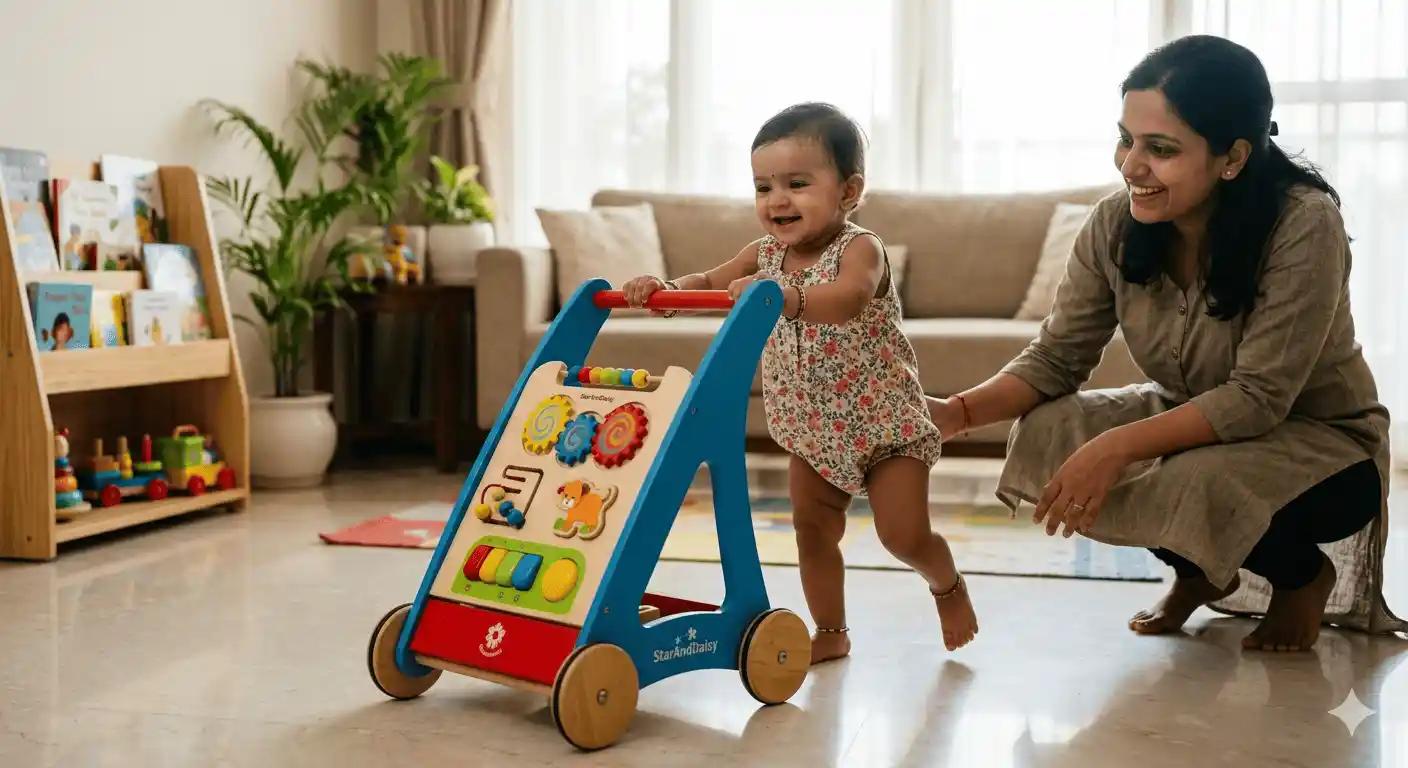
Baby Walkers: What Age, What Type, and What to Watch Out For
Few baby products generate as much debate as the walker. Paediatricians have reservations. Parents love them. Grandparents consider them essential. The truth, as usual, sits somewhere in the nuance.
What the Research Actually Says
Traditional wheeled walkers — the kind that roll across the floor on wheels — have been associated with delays in independent walking if used excessively, because they allow babies to move without developing the muscle control required for unassisted steps. They also carry fall risks, particularly near stairs.
Activity walkers and push walkers tell a different story. These require the baby to provide all the propulsion, helping build the leg strength and balance needed for independent walking. These are generally the better long-term investment.
Browse StarAndDaisy’s Baby Walker collection — thoughtfully designed for Indian floor surfaces with adjustable bases and engaging built-in activity panels.
The Right Age to Start
Most babies are ready for a push walker between 9 and 12 months, once they begin pulling themselves up to stand and cruising along furniture. Used in short, supervised sessions on a safe surface, walkers can genuinely help build confidence and coordination.
The important word here is supervised. A walker near stairs or uneven flooring becomes a safety risk. On a flat, open surface with an adult nearby, however, it can be a useful developmental tool.
Types of Baby Walkers Explained
Push Walkers
Babies push the walker forward themselves, helping strengthen their legs, balance, and coordination. Best suited for babies between 9 and 14 months.
Activity Walkers
These include sensory panels, toys, music, and interactive features that support both physical movement and cognitive stimulation.
Seated Walkers
Designed with a supportive seat, these walkers allow babies to move themselves using their feet. They are often preferred for babies who enjoy being upright but are not yet pulling themselves to stand independently.
4-Wheel Rolling Walkers
The most traditional walker style. These should be used sparingly and only on flat, safe surfaces under constant supervision.
What to Look for When Buying
For Indian homes, durability on tiled flooring is especially important. Look for adjustable height settings because babies grow quickly, non-toxic materials because everything eventually ends up in the mouth, and activity panels that are stimulating without becoming overwhelming.
StarAndDaisy’s activity walkers are sturdy, colourful, and designed to handle the excitement of babies discovering movement for the first time. Explore their full Baby Walker range featuring seated walkers for younger babies and push walkers for little explorers ready to cruise.
Frequently Asked Questions
Kanika
Author - Parenting and Maternal Wellness
Hi, I’m Kanika, a parenting and maternal wellness writer at Mamaverse. I’m passionate about creating clear, practical, and thoughtfully researched content that helps parents feel more informed and confident throughout their parenting journey. I write about pregnancy, newborn care, baby development, toddler care, child development, parenting challenges, and family well-being. Before creating content, I focus on understanding the topic carefully and referring to reliable and authoritative sources, especially when the subject involves health, safety, or child development. Through Mamaverse, my goal is to simplify overwhelming parenting information into guidance that is easy to understand and useful in everyday life. I also believe that every pregnancy, child, and family is different, so my content is designed to educate and support—not replace personalized advice from qualified healthcare professionals. My Areas of Focus: Pregnancy, Maternal Wellness, Newborn Care, Baby Care, Toddler Care, Child Development, Parenting, and Family Well-being
Comments (0)
Leave a Comment
Related Articles

Baby Feeding Made Easy: How to Choose the Right High Chair for Your Baby
The first time I placed my baby in a high chair, it felt like a milestone—until the food started flying. Choosing the right high chair can make mealtimes safer, easier, and far less chaotic.

Portable Baby Bassinets for Travel-Friendly Parenting
Discover the benefits of portable baby bassinets and how they make travel easier for parents. Explore options for safe and comfy sleep on the go.

The Art of Gentle Weaning: Moving from Milk to Solids Smoothly
The day I offered my daughter her first spoonful of rice water, she looked at me like I had personally betrayed her. By week three, she was grabbing the spoon. Weaning is a journey, not a deadline.

Common Mistakes First-Time Parents Make (And How to Avoid Them)
Navigating parenthood can be overwhelming. Discover common mistakes first-time parents make and how to avoid them for a smoother journey.