Simple Playtime Activities That Support Your Baby’s Development
Discover simple and effective playtime activities that help support your baby’s physical, sensory, and language development—without the need for expensive toys or complicated setups.
Simple Playtime Activities That Support Your Baby’s Development
Playtime is more than just keeping a baby occupied—it plays a crucial role in early development. From strengthening muscles to improving sensory awareness, simple daily activities can support a baby’s growth in meaningful ways.
The good news is that effective play doesn’t require expensive toys or complicated setups. A few thoughtful activities can make a big difference.
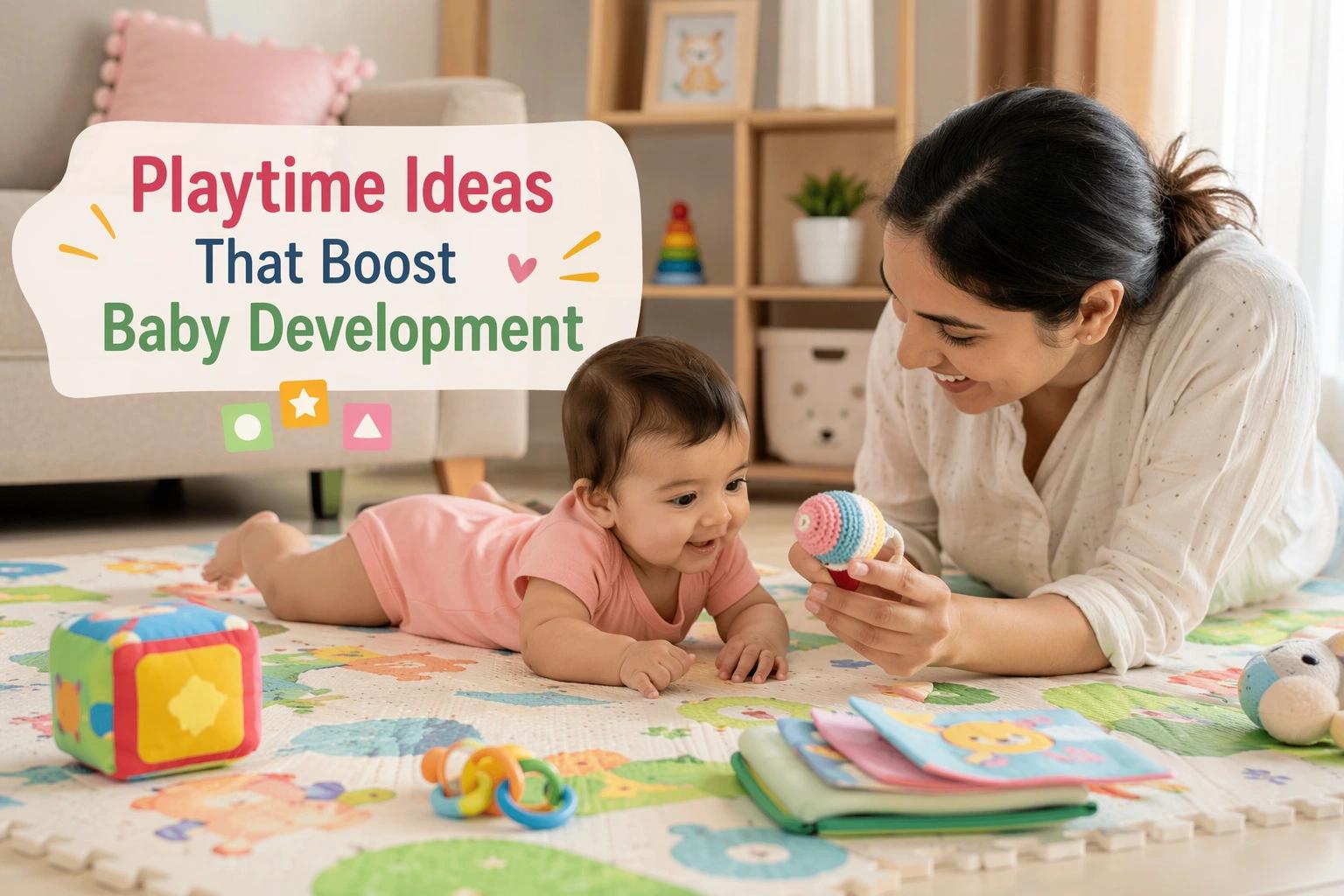
1. Tummy Time for Strength Building
Tummy time is one of the most important early activities.
How to make it easier:
- Place the baby on a soft, supportive play mat
- Keep toys within reach
- Maintain eye contact and talk gently
Benefits:
- Strengthens neck and shoulder muscles
- Prepares for crawling
- Improves posture
2. Sensory Play for Exploration
Babies learn by touching, seeing, and hearing.
Simple sensory ideas:
- Soft and textured toys
- Cloth books with different surfaces
- Safe household items like wooden spoons
Creating a designated play area helps keep things organized and stress-free.
3. Talking and Singing for Language Development
Communication starts early—even before babies can speak.
Helpful habits:
- Narrate daily activities
- Repeat simple words
- Sing lullabies and rhymes
This builds familiarity with sounds and strengthens bonding.
4. Mirror Play for Engagement
Baby-safe mirrors can be surprisingly engaging.
They help:
- Develop self-awareness
- Encourage visual tracking
- Keep babies entertained for longer periods
5. Movement-Based Play
As babies grow, they naturally want to move more.
Encourage:
- Rolling and crawling
- Reaching for toys
- Assisted standing
Occasional use of supportive tools like walkers can help, but always under supervision.
6. Outdoor Stimulation
Short outdoor sessions offer new experiences.
Fresh air, natural light, and different sounds support sensory development. A lightweight stroller can make these outings easier for parents.
Conclusion
Developmental play doesn’t have to be complicated. Consistency, interaction, and a safe environment are what truly matter.
Simple, everyday moments of play often contribute the most to a baby’s growth.
Kanika
Author - Parenting and Maternal Wellness
Hi, I’m Kanika, a parenting and maternal wellness writer at Mamaverse. I’m passionate about creating clear, practical, and thoughtfully researched content that helps parents feel more informed and confident throughout their parenting journey. I write about pregnancy, newborn care, baby development, toddler care, child development, parenting challenges, and family well-being. Before creating content, I focus on understanding the topic carefully and referring to reliable and authoritative sources, especially when the subject involves health, safety, or child development. Through Mamaverse, my goal is to simplify overwhelming parenting information into guidance that is easy to understand and useful in everyday life. I also believe that every pregnancy, child, and family is different, so my content is designed to educate and support—not replace personalized advice from qualified healthcare professionals. My Areas of Focus: Pregnancy, Maternal Wellness, Newborn Care, Baby Care, Toddler Care, Child Development, Parenting, and Family Well-being
Comments (0)
Leave a Comment
Related Articles

Baby movements: when do they start & what is normal?
Understanding your baby's first kicks and when to be concerned.

Baby gas problem: symptoms & best remedies
Recognizing baby gas symptoms and effective relief methods.

Baby spit-up vs vomiting: how to know the difference
Distinguishing between normal spit-up and concerning vomiting.

How to burp a baby correctly (positions)
Effective burping positions and techniques for your baby.